
 French manufacture 💧 Ethical & Authentic Care ✨ Natural care for all skins 💚 Wellness boxes made on the farm with love 🎁 Gift boxes 🌿 Natural routins
The Marseille soap is part of these products that pass through generations without ever disappearing. Our grandparents used to wash the laundry, clean the house and sometimes even for the daily toilet. Today, it still enjoys an excellent reputation. Natural, economical, versatile, it seduces many people looking for simpler products.
Yet behind the name « Marseille soap », the reality is sometimes more complex than it seems.
By browsing the department stores or online shops, we discover dozens of soaps that bear this name. Some proudly display their Provençal origins. Others highlight their natural composition or percentage ofvegetable oils. But not all are made according to the traditional method.
So how to recognize a real Marseille soap ? What are the criteria for distinguishing between authentic soap Just an imitation? And most importantly, once you found a real Marseille soap, is it really suitable for the skin ?
Why has it become so difficult to find a real Marseille soap ?
Many consumers think that a soap bearing the mention « Marseille soap » is necessarily made in Marseille or according to a traditional recipe. Unfortunately, this is not always the case.
Contrary to what one might imagine, the name Marseille soap is not protected by a PDO or AOC. In practice, any manufacturer can use this name, even when soap is made away from Provence or by a process far removed from the historical recipe.
This is one of the reasons why the market is today filled with very different products.
Some soaps contain mainly vegetable oils and respect traditional methods. Others incorporate more modern, sometimes less noble ingredients, while continuing to use the name « Marseille soap » on their packaging.
This situation creates some confusion. Many consumers think they are buying a authentic soap when they end up with a product that finally has little in common with the real Marseille soap.
To understand this difference, we must go back to what really makes the identity of this emblematic soap.
How to recognize a real Marseille soap ?
The real Marseille soap based on a voluntarily simple recipe. Historically, it is made fromvegetable oilswater, soda and salt.
Its manufacture follows a traditional process called Boiler cooking. This method takes time and real know-how. The oils are gradually transformed into soap during several stages which can spread over several days.
This slow manufacturing explains in part why Traditional Marseille soap built his reputation over the centuries.
When you are looking for a real Marseille soap, several clues can help.
The first concerns the composition of Marseille soap. An authentic soap contains few ingredients. The shorter the list, the closer you usually get to the traditional recipe.
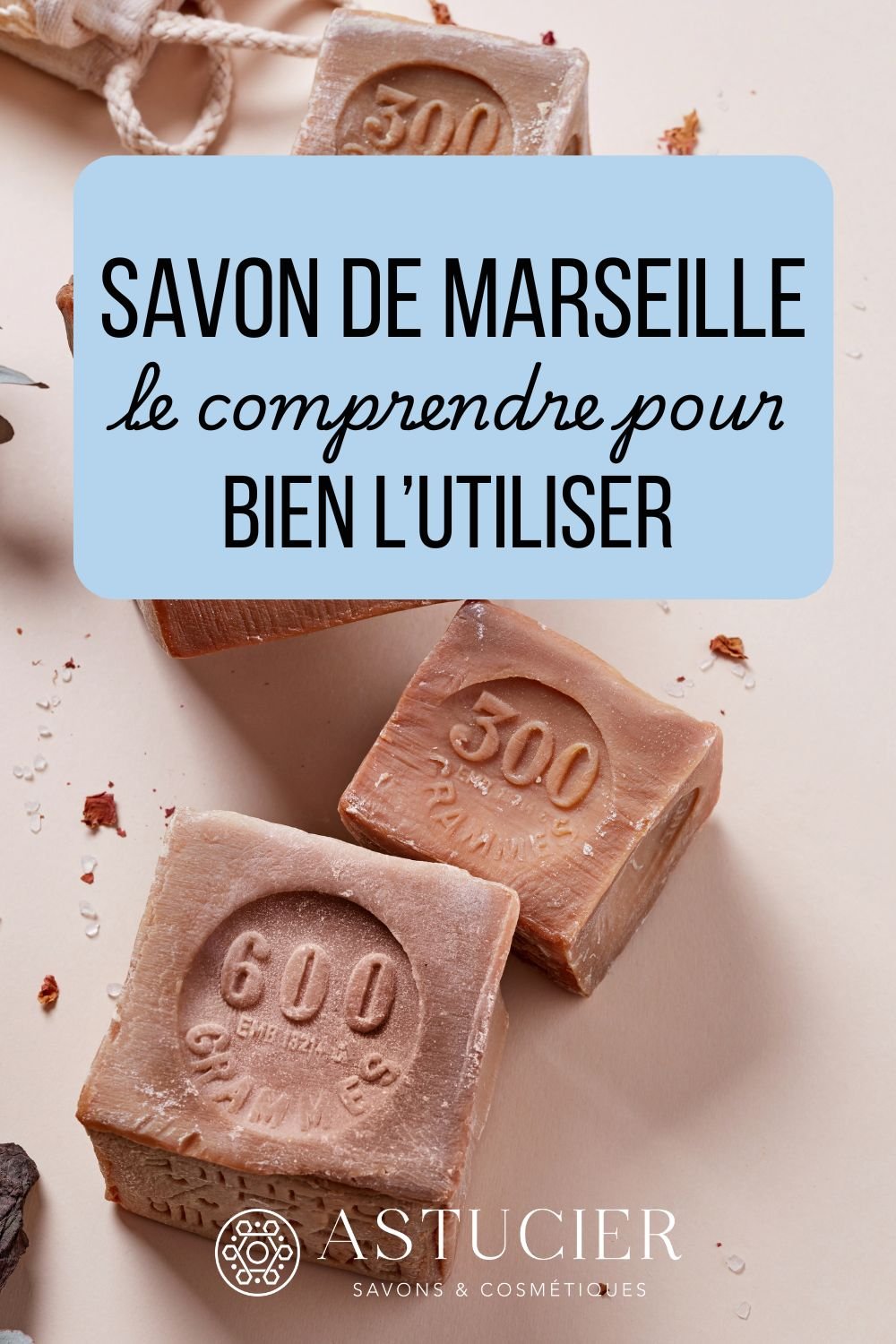
The second index is the famous marking 72 % of oils. This figure is historically the proportion of oils present during manufacturing. Although this marking alone is not an absolute guarantee, it is often associated with traditional soaps.
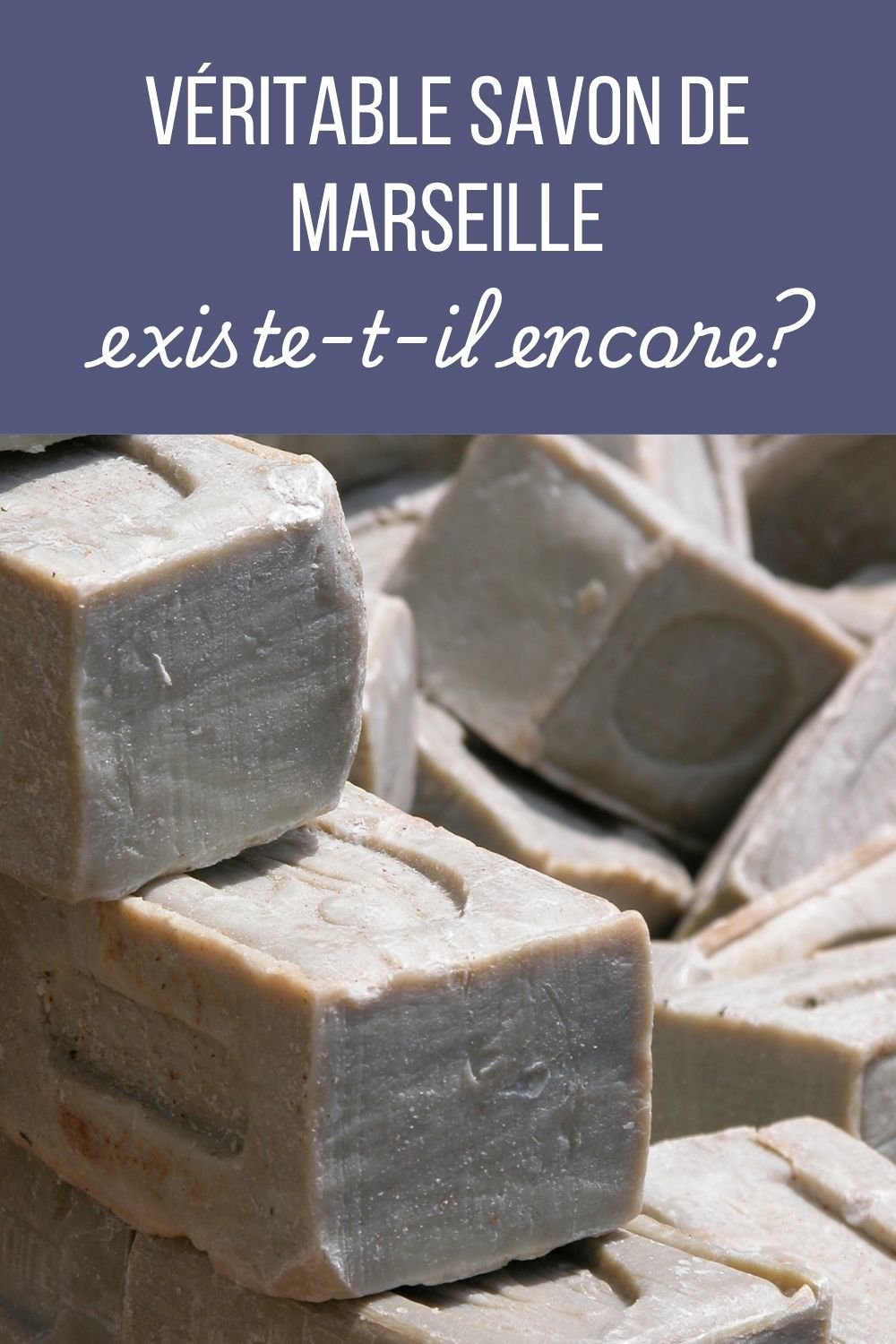
The appearance can also give some indications. The real Marseille soap usually has a green colour when it is made from olive oil or beige colour when it uses other vegetable oils. Its fragrance remains discreet as it does not normally contain any synthetic fragrance or dye.
Finally, historical manufacturers often emphasize their manufacturing methods and know-how. A manufacturer who clearly explains the origin of its raw materials and its manufacturing process generally inspires more confidence than a product whose origin remains unclear.
But recognize a authentic soap does not yet answer the question that many people ask themselves today: is it really suitable for the skin ?
Why the Marseille soap Is he still appreciated?
If Marseille soap continues to be so popular after centuries, it is no coincidence.
Its first quality is versatility.
In many houses, it is still used to untie laundry before washing. It also makes it possible to make a house wash, to clean certain surfaces or to care for different textiles.
Its relatively simple composition also reassures consumers who seek to reduce the number of household products present in their daily lives.
Only one soap can replace several specialized products. This simplicity particularly seduces people who want to limit packaging and adopt a more reasoned consumption.
The Marseille soap also has excellent cleaning capacity. It is precisely this characteristic that explains its success for so long.
And it's also this point that helps to understand why some people like it very much for their toilet while others feel more uncomfortable after use.
Because clean effectively and bring skin comfort are two objectives that do not always fully overlap.
Can we wash with a real Marseille soap ?
The answer is yes.
In contrast to some of the views expressed, a real Marseille soap is not harmful to the skin. For generations, it was used daily for the toilet of the body, hands and sometimes even hair.
Its simple composition still seduces many people who wish to limit the number of ingredients present in their bathroom.
For some skins, it fits perfectly. They appreciate its cleansing power, its lack of perfume and its simplicity.
However, some people also experience a feeling of tiring after the shower. They sometimes feel that their skin is drier than before or that it lacks flexibility.
This does not mean that Marseille soap is a bad product.
It simply means that not all skins have the same needs.
A young, unreactive and naturally balanced skin generally tolerates a traditional soap very well. On the other hand, skin already weakened by cold, wind, age, stress or certain treatments can react differently.
That is where the question becomes interesting.
For when one person claims that Marseille soap suits him perfectly while another explains that he drys his skin, they can both be right.
Why do some people feel drapes after using a Marseille soap ?
When we talk about Marseille soap, one must remember its first function: clean effectively.
For centuries, it was designed as a versatile soap capable of washing both linen and body. Its effectiveness is also one of the reasons for its longevity.
But this efficiency is based on characteristics that can sometimes be less comfortable for some skins.
The first often cited element is its Alkaline pH.
Like most traditional soaps, Marseille soap has a higher pH than the skin. After washing, therefore, the skin must naturally restore its balance.
In many people, this mechanism works smoothly.
In others, especially when the skin is already fragile, this step may be accompanied by a dry or uncomfortable feeling.
The second element concerns the absence of supergras.
Traditional Marseille soap is primarily designed to clean. It usually does not contain oils added at the end of manufacture to bring more comfort to the skin.
This is an important difference with some soap overgras or some cold soap, whose aim is to keep some of the oils in order to bring a softer sensation after the toilet.
Again, it is not about saying that one soap is better than the other.
They were simply designed to meet different expectations.
The Marseille soap Is it suitable for dry or sensitive skin?
This is probably the most common question.
And as often when it comes to the skin, there is no universal response.
Some people have sensitive skin use Marseille soap for years without any particular problem.
Others quickly feel signs ofSkin discomfort.
The difference often comes from the state of the skin when it uses the product.
A skin that is already dragging after the shower, that is easily blushing or that lacks comfort during the winter will sometimes need a softer cleaning.
In this case, Marseille soap may seem too stripping, not because it is aggressive, but because it was designed to clean effectively above all.
I regularly meet people who think they have dry skin while they suffer mainly from a uncomfortable skin.
Their skin heats after the shower.
She's shooting at the end of the day.
She seems to be biting at times.
In these situations, the choice of the product can make a real difference.
Even before changing cream or increasing care, it is often interesting to observe the skin's reaction after cleaning.
What a difference between Marseille soap and one cold overgras soap ?
This is a comparison that often comes back. At first glance, these two products may seem very close.
They're solid.
They are made from vegetable oils.
They both allow to wash.
Yet their philosophy is different.
The Traditional Marseille soap is historically a household and body soap designed to effectively clean with a simple and robust formulation.
The cold overgras soap pursues a slightly different objective.
Its cold manufacturing allows to further preserve the qualities of the oils used. In addition, some oils remain voluntarily unprocessed to contribute to the skin comfort after the toilet.
The difference is felt mainly in people who suffer regularly from tiring or drought.
Some will notice almost no change.
Others will immediately feel a more comfortable skin after the shower.
It is for this reason that there is not an ideal soap for everyone.
The best soap often remains the one that really meets your skin's needs at a given time.
So, the real Marseille soap is it suitable for the skin?
The answer is finally quite simple: Yes, one real Marseille soap can perfectly suit the skin.
Its short composition, history and efficiency make it a product that has gone through centuries without losing its place in our homes.
However, it should not be forgotten that it was designed primarily to clean effectively. This explains why it is still a reference for laundry, cleaning or everyday tasks.
For the toilet, it depends mostly on your skin.
If your skin stays comfortable after the shower, there is no reason to abandon Marseille soap. On the other hand, if you feel tiring, redness or a sensation ofSkin discomfort, it may be interesting to explore other types of soap.
Today, some soaps are formulated with a different objective: to cleanse the skin while seeking to preserve its comfort further. This is particularly the case for cold overgras soaps, drawn up fromvegetable oils carefully selected.
This is also the approach I have chosen for the soaps I make on the farm. My goal is not to replace Marseille soap or pretend it's bad. I am simply trying to propose another approach, aimed at those who wish to find a comfortable skin After the shower.
Finally, the best soap is not necessarily the most famous or the most traditional. It's the one that best meets the needs of your skin.
If you're satisfied with your Marseille soap, keep using it. But if your skin pulls, heats or lacks comfort on a daily basis, it may be worth discovering other alternatives and observing how your skin reacts.