
 French manufacture 💧 Ethical & Authentic Care ✨ Natural care for all skins 💚 Wellness boxes made on the farm with love 🎁 Gift boxes 🌿 Natural routins
You probably heard that phrase before: « If you have dry or sensitive skin, choose a neutral pH soap. »
At first glance, counsel seems logical. After all, the skin has a naturally slightly acidic pH. So one might think that a soap with a neutral pH better respects its natural balance.
Yet reality is a little more complex. pH is an interesting criterion, but it is not enough to determine whether a product is suitable for your skin. Two cleaners may have a pH similar while providing very different sensations after the shower.
If you have the skin that shoots, irritation, oily skin that detachs easily or skin sensitive that reacts to any change, choosing only a neutral pH is not always the better solution.
In this article, you will understand:
-
what the pH of a soap really is;
-
why a real soap cannot be at neutral pH;
-
the difference between traditional soap and soap free (or trade union) ;
-
what criteria to look at before choosing a cleanser suitable for your skin.
The objective is not to say that soap pH neutral is bad. It can perfectly suit some people. On the other hand, it is important to understand that the softness of a soap does not depend solely on its pH.
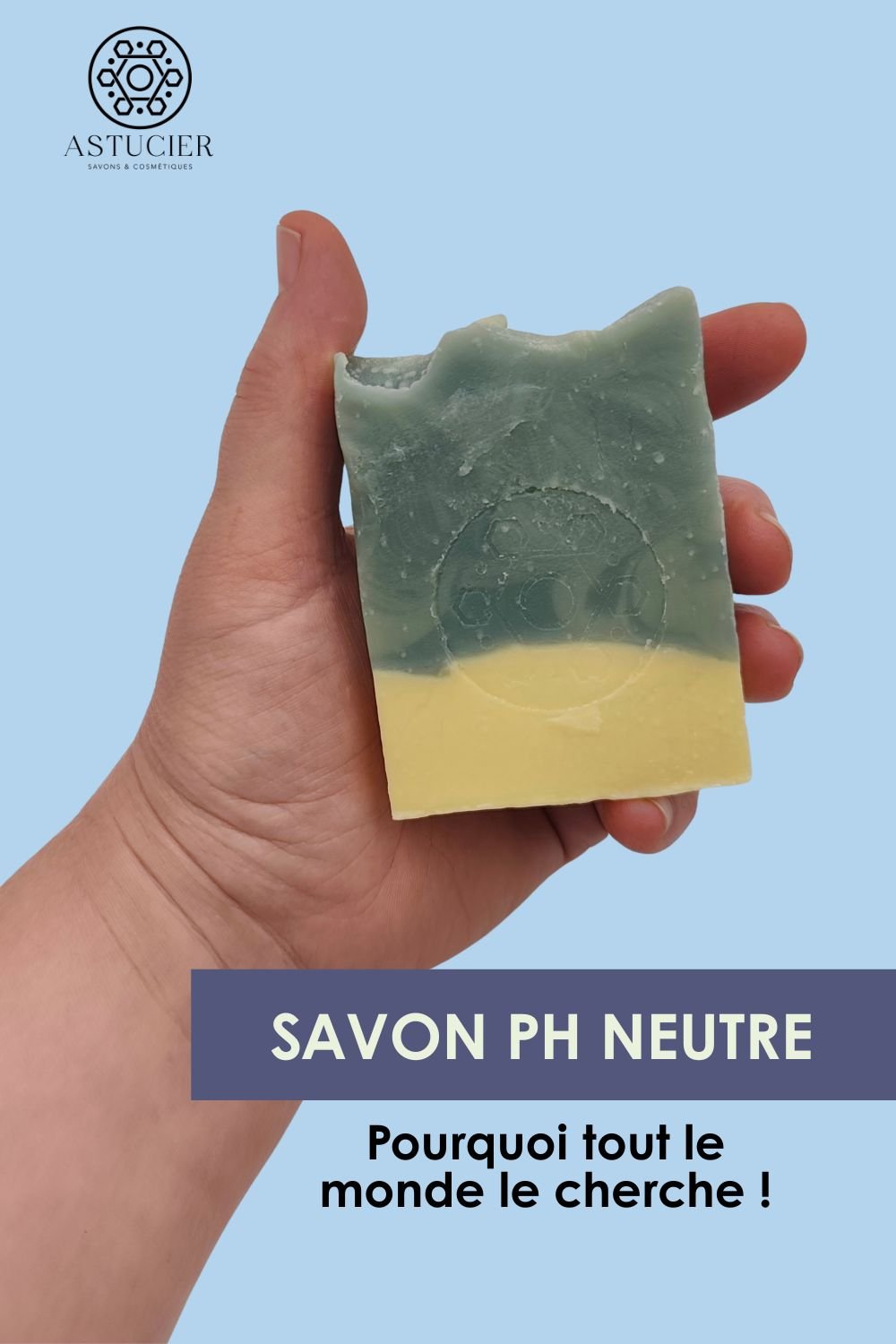
Why is everyone looking for neutral pH soap?
When someone is looking for him, it's not usually because he's interested in chemistry.
He is mainly looking for a solution daily discomfort.
By example :
-
after the shower ;
-
redness that appears easily;
-
a skin dry despite the application of a cream;
-
sensitive skin that reacts to many products;
-
oily skin that becomes shiny a few hours after cleaning.
The pH is then presented as the miracle solution.
Many brands also highlight the following:
-
« Neutral pH » ;
-
« respect the natural balance of the skin » ;
-
« suitable for all skins ».
These arguments can reassure us. Yet they only tell part of the story.
To understand why, we must first go back to a simple notion: what is pH?
What is a neutral pH soap ?
The pH measures the acidity or basicity of a product on a scale ranging from 0 to 14.
-
a pH less than 7 is acid ;
-
a pH of 7 is neutral;
-
a pH greater than 7 is basic or alkaline.
The skin, on the other hand, naturally possesses a film hydrolipidic slightly acidic. Its pH is usually around 4.5 to 5.5.
This mild acidity contributes to the proper functioning of the skin barrier. It helps in particular to limit the proliferation of certain micro-organisms and helps to maintain thenatural balance of the Skin.
It is from this observation that a very common idea arose:
If the skin is slightly acidic, soap with the same pH should be used.
The idea seems logical.
Yet it forgets an essential detail: a true soap cannot have a pH of 5.5 or a neutral pH.
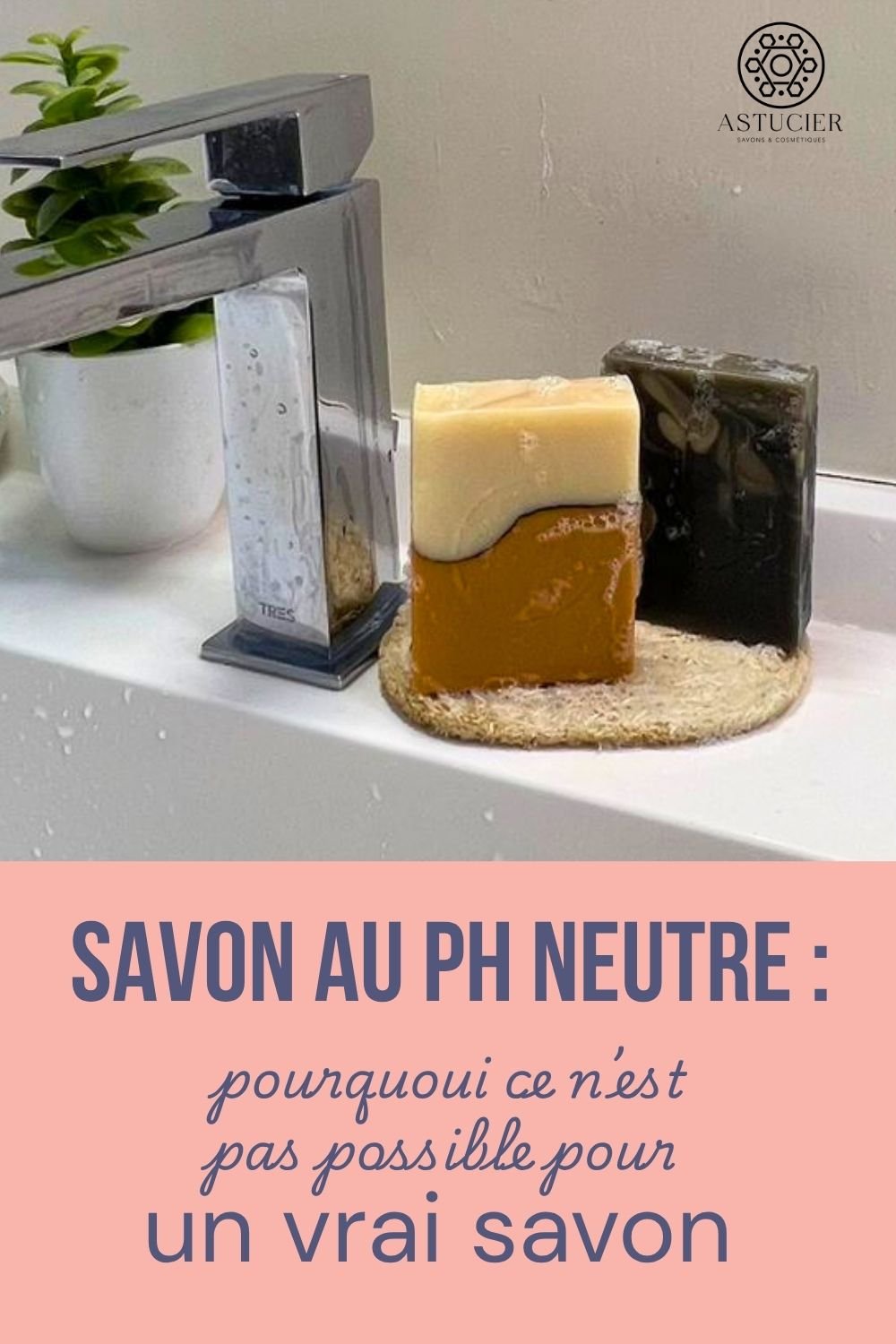
Why a real soap can't be at neutral pH
A traditional soap is obtained thanks to a reaction chemical called saponification.
The oils plant reactions with a strong base. This reaction turns oils into soap and naturally produces glycerine.
The result is always a mildly alkaline soap.
In other words, a cold or hot saponification soap naturally has a pH above 7.
This is not a manufacturing defect.
It is simply the consequence of soap chemistry.
If the pH was lowered to 5 or 6, the soap would start to decompose and lose its properties Cleaners.
This is why a true soap cannot be marketed as a solid at neutral pH.
This is often surprising because many products sold under the name of « soap » yet have a pH close to that of the skin.
In reality, these are usually not soaps in the sense of Chemical of the term.
Most are syndicates, also called soap-free soap.
Neutral soap, soap-free soap and syndet: what differences?
These three expressions are often used as if they meant exactly the same thing. Yet there is an important nuance.
Neutral pH usually refers to a cleaner whose pH is close to 7 or sometimes pH natural skin. In the rays, this expression is mainly used to reassure people who are looking for a soft product for the shower.
But in the majority of case, this product is not a real soap.
A real soap results from a reaction of saponification between oils and a base. It naturally has a basic pH. It cannot therefore be at neutral pH without losing its structure.
Soapless soap, on the other hand, does not contain soap in the chemical sense. It is formulated from cleaning agents called surfactants.
The word syndet comes from the English expression synthetic detergent. It refers to the same family of soap-free cleaners.
In other words:
-
a syndet is a soapless soap;
-
soap without soap can be formulated at neutral pH or physiological pH;
-
genuine saponified soap is not at neutral pH.
The confusion arises mainly from the fact that the word « soap » is commonly used to talk about all solid products intended to wash the skin.
However, dermatological bread, solid syndet and cold saponified soap are not made in the same way.
They don't clean either, thanks to the same agents.
How do I recognize a trade union?
A syndet can be in the form of solid bread, shower gel or washing gel.
Its formula usually contains several surfactants. It is they that allow water to remove dirt, sebum and certain impurities present on the skin surface.
Depending on the surfactants selected and their concentration, the product can be very mild or, on the contrary, more detergent.
This is an essential point: neutral pH is not enough to guarantee the softness of a formula.
Two products can display the same pH while containing very different cleaning agents.
Is the physiological pH really neutral?
The neutral pH must also be distinguished from the physiological pH.
A neutral pH is 7.
But the natural pH of the skin is slightly acidic. It is usually around 4.5 to 5.5, although it varies depending on the area of the body, age, perspiration and condition.
A product announced as being « at skin pH » therefore is not really neutral. It's slightly acidic.
The trade mentions sometimes cause this confusion by using indifferently:
-
neutral pH;
-
mild pH;
-
physiological pH;
-
respect the natural pH of your skin.
These expressions do not always mean the same thing.
It is for this reason that it is better to look at the complete formula rather than to stop at a single mention on the packaging.
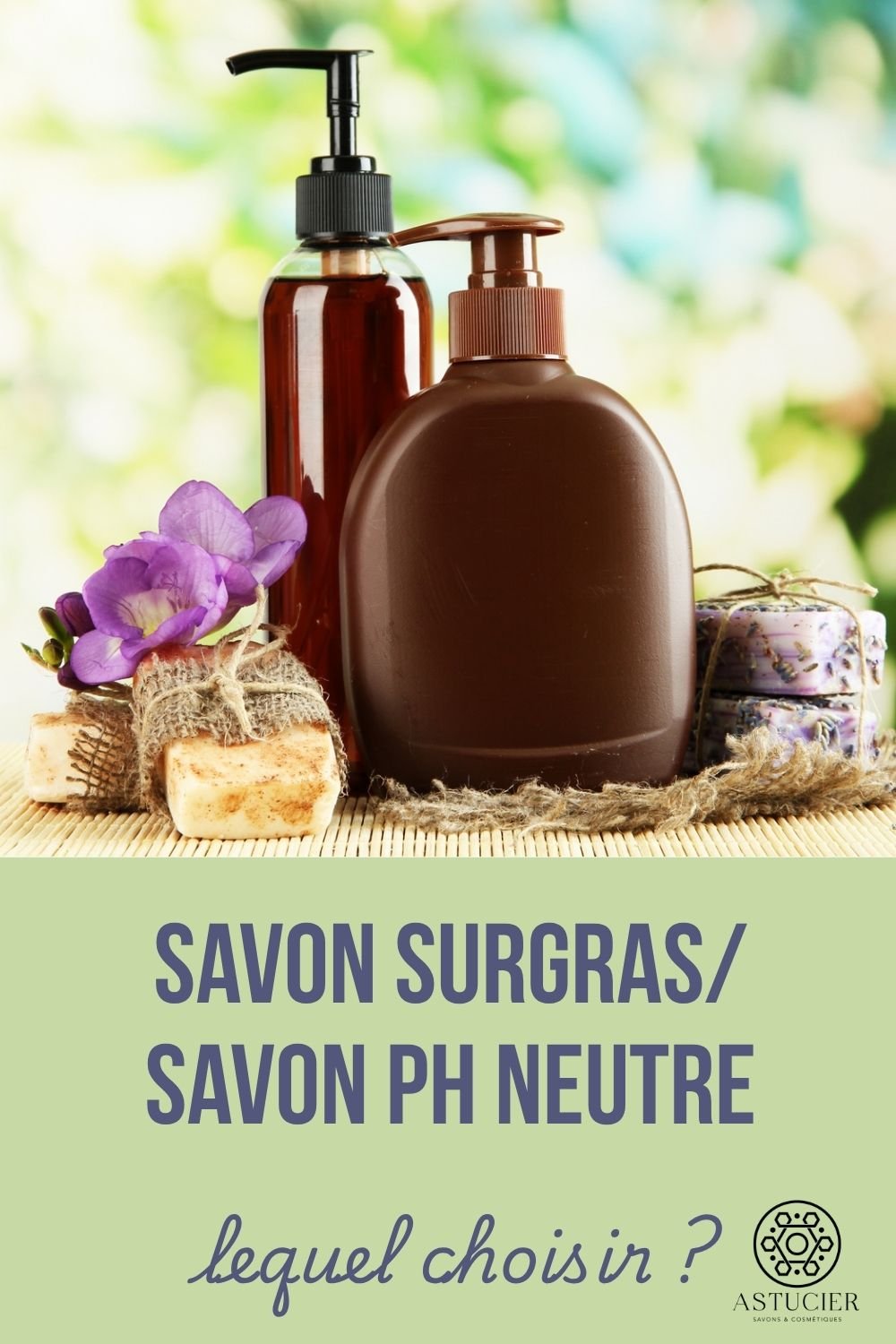
Overgras soap or neutral pH: which one to choose?
There is no universal response.
The most appropriate choice depends primarily on you, your needs and how the product is formulated.
Neutral pH and overgras soap are often opposed. Yet these two products do not seek to achieve their goal in the same way.
Neutral pH relies primarily on a pH close to that of your skin to limit the disturbances of its natural balance.
Soap overgras acts otherwise. Due to its excess vegetable oils and the glycerin naturally produced during the cold saponification, it seeks to clean while limiting the feeling of drought after washing.
In other words, these two approaches often pursue the same objective: to preserve your comfort.
The difference is more in their mode of action than in their effectiveness.
This is why it is difficult to say that one is systematically better than the other.
Skin that is very well supported by overgras soap may not enjoy soap without soap, and vice versa.
The surfactants: a criterion often more important than pH
When one speaks of mildness, one almost always evokes pH.
However, dermatologists are also interested in surfactants, because they are the ones who perform cleaning.
The surfactants have a double affinity: a part attracts water, other fatty bodies present on your skin barrier. They remove sebum, sweating and impurities when rinsed.
Not all surfactants look the same.
Some clean very energetically. Others are much softer.
Two neutral pH shower gels can therefore provide very different sensations simply because they do not use the same cleaning agents.
This is an essential idea to remember:
The pH indicates the ph d a product. It does not provide information on the hardness of its surfactants.
Choose a cleaner only because it displays « Neutral pH » So back to looking at only one piece of the puzzle.
The film hydrolipidic: the true ally of your comfort.
The surface of your skin is protected by a thin layer of water, sebum and lipids.
We call it the film hydrolipidic.
This natural protection plays several essential roles:
-
it limits water loss;
-
helps maintain the skin barrier;
-
protects the epidermis from external aggression;
-
it helps to maintain the balance of the skin microbiota.
After a shower, this protection is restored naturally.
However, when it is repeatedly weakened, the skin can become uncomfortable.
She's firing more. It can get drier. Some people also see more redness or more reactive skin. The role of a good cleaner is therefore not only to remove impurities. It must also respect as much as possible this film protective. And that is precisely where the complete formulation takes on its full meaning.
Why do some skins stay dry despite neutral pH?
Many people think they have found the alternative by buying soap at neutral pH.
Yet, a few weeks later, their epidermis continued to pull.
Why?
Because the problem is not always pH.
If it is dry, it primarily lacks lipids. If dehydrated, it lacks water. If she is sensitive, she often has a film fragile.
In these situations, simply replacing the cleaner with a neutral pH product is not necessarily enough.
Comfort also depends on:
-
the frequency of showers;
-
water temperature;
-
quality of ingredients;
-
whether or not there is an overgras;
-
care applied after the shower.
This is why some people find a comfortable skin barrier with overgras soap, while others prefer neutral soap.
It's not about knowing what product is « best ».
It's about finding the one that really meets the needs of your skin barrier.
Which soap to choose according to your skin type?
Rather than asking yourself if a product is pH neutral, ask yourself the right questions.
it is dry
Prefers a cleaner that leaves a feeling of comfort after the shower. An overgras soap rich in vegetable oils or a syndet formulated with soft surfactants can both be suitable.
Essentially, you don't feel, you don't pull after washing.
she's sensitive
Choose a simple formula. The less ingredients, the easier it is to identify the ones that fit it.
Also avoid multiplying products if you react easily.
She's fat.
A common error is using a very aggressive cleaner to remove sebum.
Actually, stripping your skin can cause overproduction of sebum.
It is best to choose a gentle cleanser, able to clean effectively without imbalance of skin.
You don't know what his type is;
Start by observing his reactions after the shower.
Is she pulling? Does she scratch? Is she burning fast? Does it roar easily?
These observations will help far more than just mention « Neutral pH » on a package.
Should we choose a neutral pH soap?
Neutral pH can be an excellent option for some people. Its pH close to that of your epidermis helps to preserve its natural balance and explains why it is often recommended for sensitive people.
But pH only tells part of the story.
The softness of a cleaner also depends on many other criteria: the quality of its formulation, the surfactants used, the presence of overgras, the glycerin naturally produced during cold saponification, or the vegetable oils that make up it.
In other words, a product does not automatically become more respectful because it displays the mention « Neutral pH ».
If you have dry, sensitive skin, reactive or even fat, take the time to observe how to film lipid reacts after the shower. Is she comfortable? Does she shoot? Does she scratch? Does it roar easily?
These sensations are often more revealing than the only pH indicated on the package.
So best soap is not necessarily the one that has the pH closest to your epidermis. It is above all the one who respects the needs of your skin on a daily basis.
In summary
✔ Real soap cannot be at neutral pH.
✔ Products presented as neutral pH soaps are usually soap-free soaps, also called syndets.
✔ pH is an important criterion, but it is not sufficient alone to assess the hardness or not of a cleaner.
✔ The surfactants, supergras, glycerin and quality of the formulation also play an essential role.
✔ The better choice depends on your skin type and how it reacts after washing.
Frequently asked questions about neutral pH soap
Is a neutral soap better For you?
Not necessarily. The pH is an element to consider, but the softness of a cleanser also depends on its surfactants, its formulation and the possible presence of overgras.
Can a real soap be at neutral pH?
No. A soap obtained by saponification is naturally alkaline. If it were reduced to a neutral pH, it would no longer retain the properties of a soap.
What is the difference between soap and soap-free soap?
Traditional soap results from a saponification reaction between oils and a base. Soapless soap, or syndet, is formulated from surfactants and can be adjusted to a pH close to your epidermis.
Is an overgras soap at neutral pH?
No. An overgras soap made by saponification remains alkaline. Its comfort comes mainly from its overgras, its natural glycerin and its formulation, not its pH.
Which soap to choose for a dry or sensitive skin?
There is no universal response. Privilege a cleaner that respects your epidermis, leaves a feeling of comfort after the shower and has a formulation adapted to your needs.