 French manufacture 💧 Ethical & Authentic Care ✨ Natural care for all skins 💚 Wellness boxes made on the farm with love 🎁 Gift boxes 🌿 Natural routins
The most natural soap: how do you really recognize it?
When looking the most natural soapOne often thinks of a simple, healthy, skin- and environmental-friendly product. It's a legitimate expectation. Yet behind this word, there is often a lot of blur.
On packaging, on markets, in advertisements, the term "natural" returns everywhere. But in reality, he deserves to be retarded. For a really natural soap, in the strict sense of the term, does not exist entirely.
So, What is the most natural soap for the skin?
The one with an attractive marketing promise? Or the one who clearly explains how it is made, with what raw materials, and why?
Here, I'll help you see more clearly.
The most natural soap: a real question, but a less simple answer than you think
When you're looking the most natural soap, you often look for several things at the same time :
-
mild soap for the skin,
-
soap made with few ingredients,
-
soap with quality raw materials,
-
soap more transparent than industrial products.
And you're right.
The problem is that the word natural does not always mean the same according to the person who is employed. For many consumers, it evokes something crude, simple, little transformed. But in the cosmetic world, this word can quickly become a marketing argument. This is one of the main points of your current article.
Can soap really be natural?
That's where everything changes.
A soap is the result of a chemical reaction : saponification. We mix fatty bodies with an alkaline base. This transformation creates... Soap.
In other words, even if you leave with natural vegetable oils, the final product is no longer a raw material that remains intact. He's been transformed. That is precisely why it is difficult, if not impossible, to say that a soap is natural in the strict sense. Your article already explains very well: raw materials can be natural, but finished soap is no longer it since it has undergone saponification.
That is why, in my view, the real question is not:
"Is this soap natural?"
The right question would be:
"How is this soap made, and with what raw materials?"
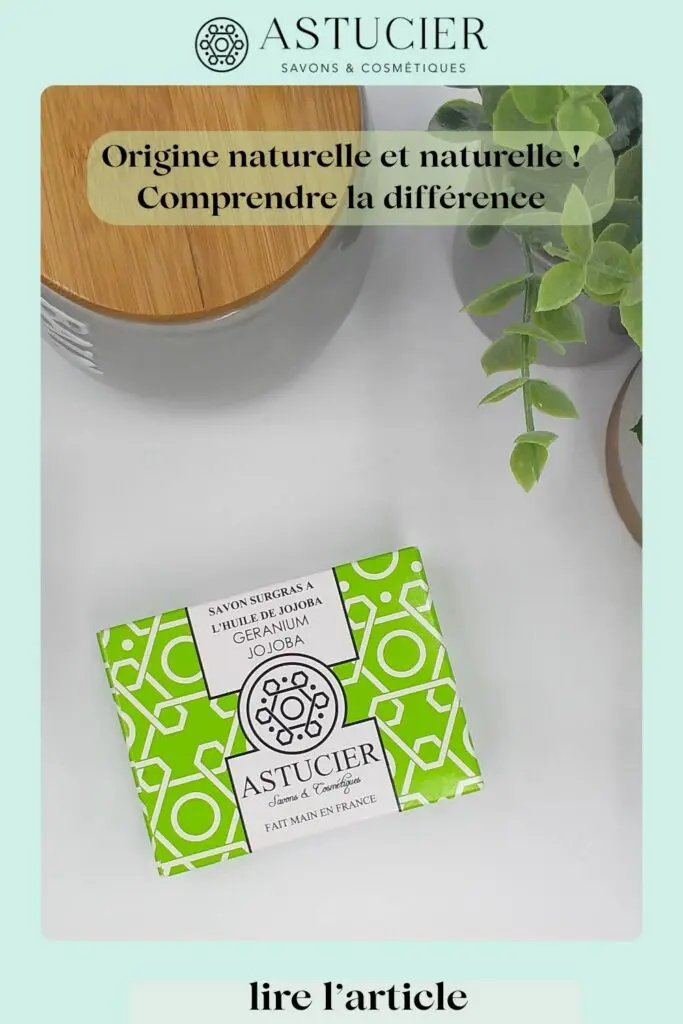
The most natural soap is not the one that says it the loudest
Today, many brands put forward reassuring promises. Natural. Clean. Authentic. Pure. But these words alone are not enough to guarantee the quality of a soap.
A soap may seem very "nature" on its packaging and yet rest on blurred communication. Conversely, a craftsman can be more nuanced, more precise, more honest... and offer a much more consistent soap with what you're looking for.
For me, the most natural soap, it is above all a soap:
-
manufactured with quality vegetable raw materials,
-
carefully formulated,
-
produced in small quantities,
-
explained with transparency,
-
Thought to respect your skin.
It's not a slogan. It's a step.
the quality and origin of raw materials
When I make my soaps, I don't try to surf a fashionable word. I seek to make products consistent, sincere, and pleasant to use.
My soaps are made from carefully selected natural raw materials. Some oils come directly from our farm. Others are selected for their cosmetic qualities. This requirement on the origin of the ingredients is, in my view, part of what brings a soap closer to the idea of a "natural" soap. Your article already insists on this transparency regarding oils, waxes, perfumes, clays and other ingredients used.
Table of origin of raw materials
| Raw material | Nature / transformation | Source |
|---|---|---|
| Rape oil | Natural | From our farm |
| Hemp oil | Natural | From our farm |
| Camelin oil | Natural | From our farm |
| Olive oil | Natural | Organic farming |
| Coconut oil | Natural | Organic farming |
| Shea butter | Natural | Organic farming |
| Fragrance | Natural origin according to composition | By supplier |
| Vegetable wax | Transformed, unnatural in the strict sense | By supplier |
| Vitamin E | Result of a transformation | By supplier |
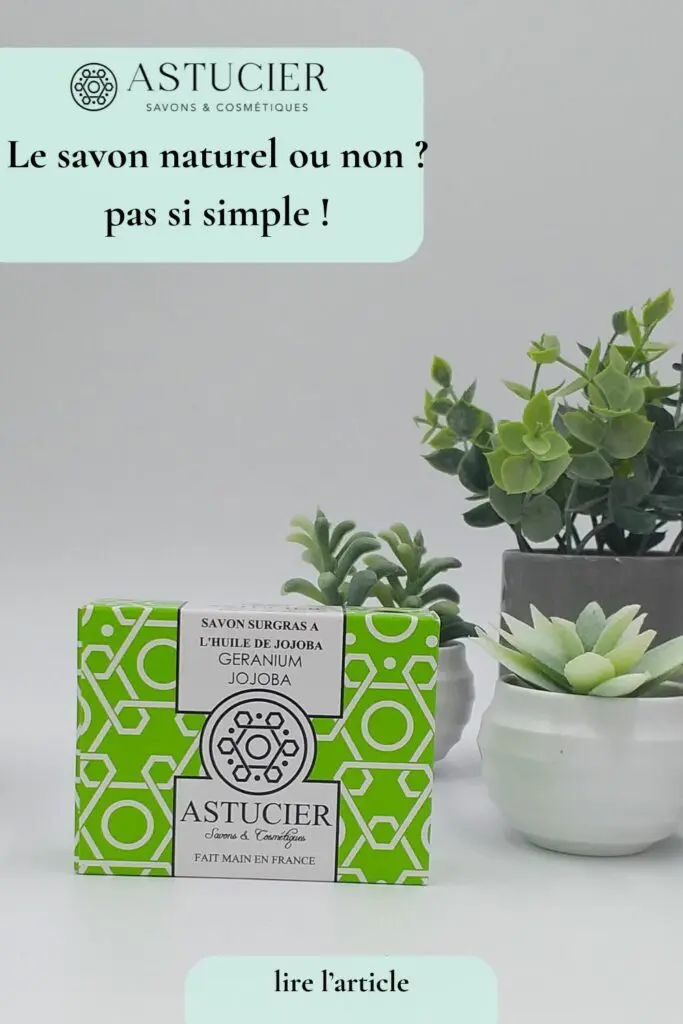
So, what is the most natural soap for the skin?
I'll answer you frankly:
the most natural soap is not necessarily the one that claims to be natural.
It is often the one who assumes the reality of its manufacture, who explains its ingredients, and who relies on simple, fresh and well chosen raw materials.
For the skin, it changes a lot.
A soap made with beautiful vegetable oils, well formulated, with a serious artisanal approach, can offer a much more interesting experience than a product that simply uses the word "natural" as a commercial argument.
In other words, if you want to choose the most natural soap, look less at the promise displayed and more:
-
the list of ingredients,
-
the quality of the oils used,
-
the method of manufacture,
-
transparency of the manufacturer,
-
the overall consistency of the product.
The most natural doesn't always mean the best
This is an important point.
A natural ingredient is not automatically better for everyone. And a processed product is not necessarily bad. What matters is the balance between:
-
quality of raw materials,
-
efficiency,
-
skin tolerance,
-
the sincerity of the formulation.
That's why I prefer to talk about quality, of transparency and coherence, rather than making great promises around the natural word.
My advice to find the most natural soap
If you want to make a real good choice, don't stop at packaging.
Take the time to ask yourself:
-
Who makes this soap?
-
What oils?
-
What part of the speech is based on concrete?
-
Does the brand clearly explain its approach?
-
Does she talk about her ingredients accurately?
The more a manufacturer is able to explain simply what it does, the closer you get to an informed purchase.
In conclusion: the most natural soap, it is above all the most transparent
Search the most natural soap is a very good step. But to choose well, you have to go further than the word itself.
No soap grows in a tree. Soap remains a product transformed by saponification. On the other hand, it can be made from natural raw materials, fresh, carefully selected, and integrated into an honest artisanal approach. That's exactly the idea developed in your current article.
For me, the most natural soapSo it's the one who doesn't try to sell you a blurry dream.
It is the one who tells you the truth about its composition, its origin, its manufacture, and who really takes care of Your skin.