 French manufacture 💧 Ethical & Authentic Care ✨ Natural care for all skins 💚 Wellness boxes made on the farm with love 🎁 Gift boxes 🌿 Natural routins
Best soap for atopic skin: how to choose without worsening itching
If you type best soap for atopic skinIt's rarely "out of curiosity." You're usually looking for something. stop the infernal circle. You wash yourself, your skin is pulling. You scratch yourself a little (or a lot). You're applying a cream. You feel better... Then it starts again. And the worst part is that what works "at others" doesn't necessarily work at you.
I'll be direct. a soap does not "sweet" the atopie. But a good soap can really change your daily, because it can reduce aggression during the shower. And when you have atopic skin, it's often where everything is played: washing can soothe... or on the contrary trigger a crisis.
Here I help you understand how to spot the best soap for your atopic skin, without drowning in marketing promises. I also explain what I see most often in clients who have reactive skin: classic mistakes, stinging ingredients, and especially concrete criteria that make the difference.

The best atopic skin soap: what it really changes in the shower
Atopic skin is not "just dry skin". It is a skin that reacts, which ignites easily, and which often has a fragile skin barrier. Result: water, limestone, washing products, friction... Everything can become a trigger.
And that's where a lot of people are wrong: they think that the problem comes only from lack of hydration, whereas in reality, atopic skin needs especially when it comes to Stop assaulting.
You can put the best creams in the world: if your haircut, you go with a disability.
"Best soap for atopic skin"So it's often soap that does something very simple: He cleans without punishing your skin.
Why Some Knows Worse Everything
You may have already experienced this: you change soap, you are full of hope, and after two days you feel that your skin becomes even more uncomfortable. Not necessarily because "soap sucks", but because certain characteristics are incompatible with atopic skin.
1) Soap too detergent
Even if it smells good, even if it "mouses well", a soap can be too aggressive. The more he stripes, the more he removes the hydrolipidic film that protects your skin. And on an atopic skin, this film is already fragile.
2) Too much perfume, too much essential oils
It is tempting to take a "doudou" soap that smells like orange blossom or lavender. But perfumes and essential oils remain frequent causes of irritation in reactive skin.
Doesn't mean everyone's gonna react. That means: If your skin flames easily, you limit the risks.
3) Irritant syndicates
Many soap-free products (dermatological syndets) can be useful, yes... But some contain irritating surfactants, or formulas so long that you don't even know what you're putting on your skin anymore. Tolerance depends heavily on the formulation.
Key point: You don't choose a soap for his marketing, you choose it for its ability to respect skin already in bloom.
The concrete criteria of the best soap for atopic skin
I give you simple criteria here, because when your skin scratches you don't want to do a master's degree in cosmetic formulation.
1) A short and legible formula
On atopic skin, I always prefer a formula Simple. The less ingredients, the less risk of reaction.
A good reflex: if you read the INCI list and feel like you're reading a chemistry formula, distrust. It's not "bad" in itself, but it's not necessarily the most suitable when you're looking for maximum tolerance.
2) Surgras soap (and not just "announced as sweet")
Overgras is what can leave your skin feeling comfortable after rinsing. It doesn't replace a treatment, but it sometimes avoids the "skin that screams" effect.
Attention: "surgras" is not a magic word. Some soaps are overgras but contain a lot of perfume, allergens, or essential oils. The best soap for atopic skin often combines supergras + simplicity + zero unnecessary irritant.
3) Soft manufacturing (often: cold saponification)
Cold saponification is of great interest to sensitive skins because it helps to conserve naturally the glycerin produced during the reaction. This glycerin contributes to a feeling of softness and comfort.
And above all, in handicrafts, you often find more "right" compositions: vegetable oils, a soap base, sometimes a simple addition like honey... and basta.
(4) No perfume, no essential oils (if your skin reacts)
I say it voluntarily again: if you look for the best soap for atopic skin, you often win choosing without perfume and without essential oilsAt least time to stabilize your skin.
Then you can test something else if you want, but the safe starting point remains: do not add potential irritants.
(5) A good rinse, a nice foam (yes, it counts)
When the foam is fine, when the soap slides well, you rub less. And when you rub less, you're less irritating.
It sounds silly, but it's very concrete: atopic skin doesn't need a shower test.
"Natural" soap: attention to shortcut
I am the first to love simple ingredients, vegetable oils, and formulas without superfluous. But I'd rather be honest. natural does not mean automatically tolerated.
A natural soap may contain:
-
very allergenic essential oils,
-
natural fragrances (which remain perfumes),
-
plant powders or extracts that react to certain skins.
So yes, soap can be natural and a bad choice for your atopic skin. The best soap is the one that corresponds to your tolerance, not the one who ticks a trend.
The foam trap, so it washes better.
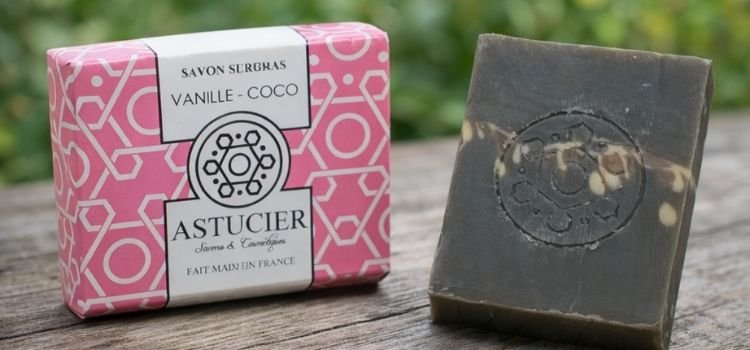
I give you my opinion (and I assure you): we got "educated" to think that The more foam, the cleaner it is. While in reality, on atopic skin, an abundant moss can sometimes be the sign of too strong washing power.
You have the right to love foam, obviously. But look for a foam creamysoft, which does not leave the skin feeling "degreased".
How to test a soap when you have atopic skin
You can have the best soap in the world on paper... And not to stand it. Atopic skin has this unpredictable side. So I'm offering you a simple method, without taking the lead.
Progressive test
You use your soap on a small area for a few days (e.g. arm or leg). If everything's all right, you'll expand.
You watch the real signals
- Pulls immediately after rinsing
- Redness remaining
- Itching within one hour
- Heat sensation
If you see that, it's not "in your head." Your body clearly says: Stop.
You change one thing at a time
That's the golden rule. If you change soap + cream + laundry at the same time, you will never know what helped (or worsened).
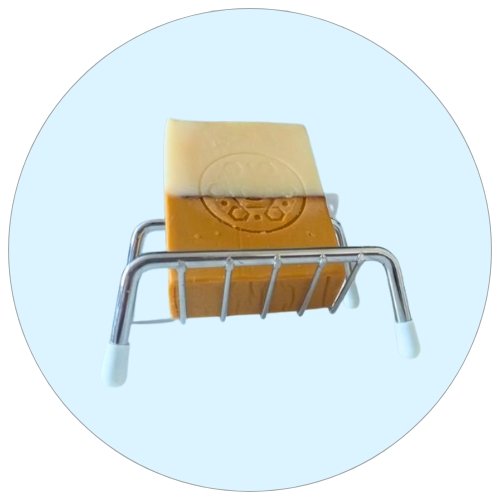
Conclusion: the best soap for atopic skin is the one that leaves you alone
If I were to summarize: le best soap for atopic skin, it is not the one who promises mountains and wonders. He's the one who lets you out of the shower without apprehension. The one that lets you wash without triggering a crisis. The one who respects an already sensitive skin, already requested, already tired.
Choose simple. Choose soft. Give yourself the right to test without guilt if it doesn't work. And if you feel that your skin wraps up, don't wait: a doctor or dermatologist can help you find a balance.