
 French manufacture 💧 Ethical & Authentic Care ✨ Natural care for all skins 💚 Wellness boxes made on the farm with love 🎁 Gift boxes 🌿 Natural routins
Benefits Of rapeseed oil : why I use it in My soaps for comfortable skin
When you talk about rapeseed oil, you often think about cooking. However, this vegetable oil also deserves its full place in a simple, local and efficient treatment routine.
Why? Because it is not only used to season a salad. It also helps to take care of the skin gently.
On my farm, I grow rapeseed, harvest the seeds and produce myself the oil that I then use in my soaps. Here, therefore, the treatment begins well before the soap factory. He starts in the fields.
And that's exactly what makes all the difference.
In this article, I will explain the benefits of rapeseed oilhis interest in the skin, the way I produce it on my farm, and why it brings so much comfort in my saponified cold soaps.

Why rapeseed oil deserves more attention
The rapeseed oil sometimes suffers from too common a picture. We see it as an oil of everyday life. Simple. Classic. Almost ordinary.
And yet his composition tells a whole different story.
Naturally rich in essential fatty acids and in vitamin E, it has real qualities to take care of the skin. It nourishes, protects, softens and contributes to skin comfort. In other words, it has its place in a soap intended for the skins that pull, uncomfortable skins or those that simply need more softness.
At Astucier, I don't pick my oils at random. I choose raw materials that make sense. Raw materials I know. Raw materials that I can relate to a place, a job, a season.
The rapeseed oil is one of them.
From field to skin: how I grow rapeseed on my farm
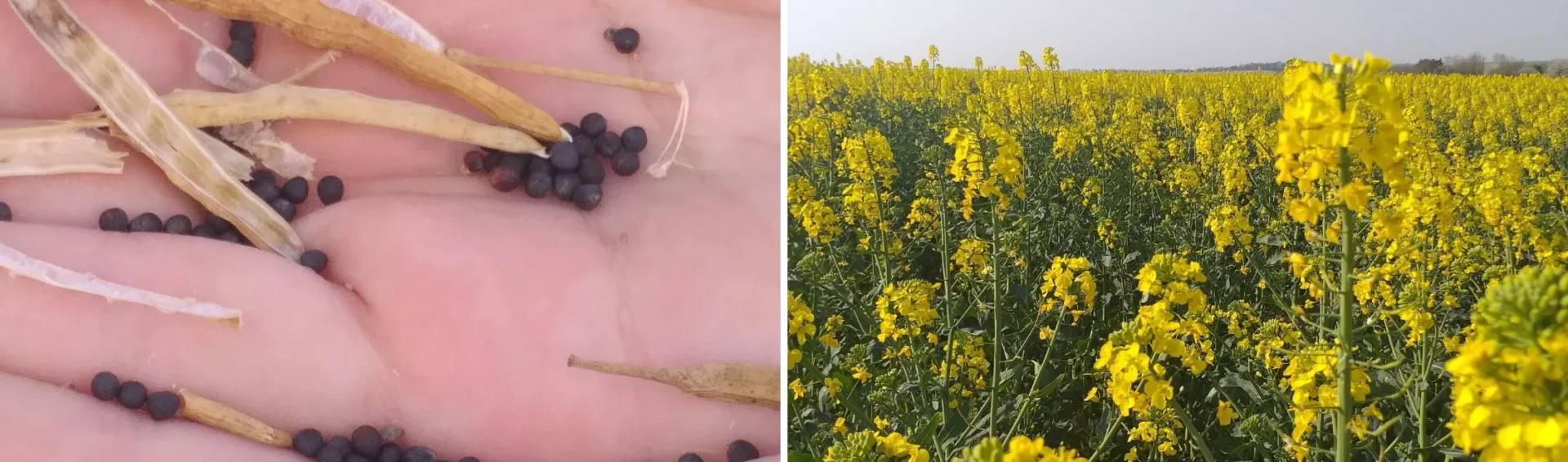
The rapeseed, or Brassica napusis part of the Brassicaceae family. It is a large oilseed crop well known in our landscapes. In the Marne, it is one of these crops that rhythmize the seasons and transform the fields into large yellow expanses in the spring.
But before arriving in soap, the rapeseed follows several steps.
Seedling
I sow rape in the fall. At that point, it all starts. The seed enters earth, in a carefully prepared soil, to start its cycle.
Germination and Development
Then the plant raises, settles and develops its root system. It spends winter in place, then resumes its growth in spring.
Flowering
This is probably the most spectacular stage. In spring, rapeseed blooms and covers the patches of a bright yellow. This flowering prepares the continuation: the formation of pods and seeds.
Harvesting
When the seeds mature, I harvest the rapeseed. It is this raw material that I will then turn into oil.
This direct link between culture and care changes everything. Here, I'm not talking about an anonymous oil purchased from the other side of the world. I'm talking about an oil produced on my farm in the Marne, from what we grow.
It's concrete. It's local. And that gives real consistency to my knowledge.
How I make my rapeseed oil
After harvest, the seeds go through several steps before becoming an oil ready for use.
Cleaning and sorting
I start by cleaning the seeds to remove impurities. Then I sort them out to keep a quality raw material.
Cold pressing
Then I press the seeds cold. This method is particularly interesting because it respects more the natural qualities of oil. It makes it possible to obtain a rapeseed oil that keeps all its interest, both for food and cosmetics.
Decantation and filtering
After pressing, oil rests. I let it settle, then filter it in order to get a clean oil, pleasant to use and suitable for my manufactures.
A really local oil
I carry out these steps on my farm, with the seeds harvested on the farm. This is what allows me to propose a French rapeseed oil, and even marnaise.
For me, this origin counts. It brings traceability, coherence and sincerity to what I make. When I talk about local soap, it's not an empty marketing argument. This is the reality of my work.
The benefits of rapeseed oil for the skin
Let's get into the heart of the subject: the benefits of rapeseed oil on the skin.
If I use it in my soaps, it's not just because I produce it. It is also because it has interesting properties to help the skin regain comfort.
It helps feed the skin
The rapeseed oil contains fatty acids that contribute to skin flexibility. In cold saponified soap, it is integrated into a formula that washes without unnecessary aggression.
The result: the skin remains more comfortable after the shower.
It contributes to the comfort of sensitive skin
Uncomfortable skin is not just a skin type. It can be dry, mixed, oily or sensitive. What characterizes it is the sensation: tiring, discomfort, warm skin, rough skin, unpleasant sensation after washing.
The rapeseed oil finds here all its interest. It contributes to the softness of the formula and helps make cleaning more skin friendly.
It provides a protective action
Thanks to its vitamin E content, rapeseed oil also brings an antioxidant interest. It helps protect the skin against the external aggressions of everyday life.
Wind, cold, limestone water, too aggressive cleaners, too hot showers... The skin undergoes a lot. Choosing a softer soap then becomes a real gesture of comfort.
It fits perfectly into a daily soap
The advantage of rapeseed oil is also its versatility. It is very suitable for regular use. It naturally finds its place in soaps designed for simple, family and pleasant use.
No need for a complicated routine to take care of your skin. Sometimes a good soap and a good care after the shower is enough to change a lot.
Why I use it in my Astucture know-how
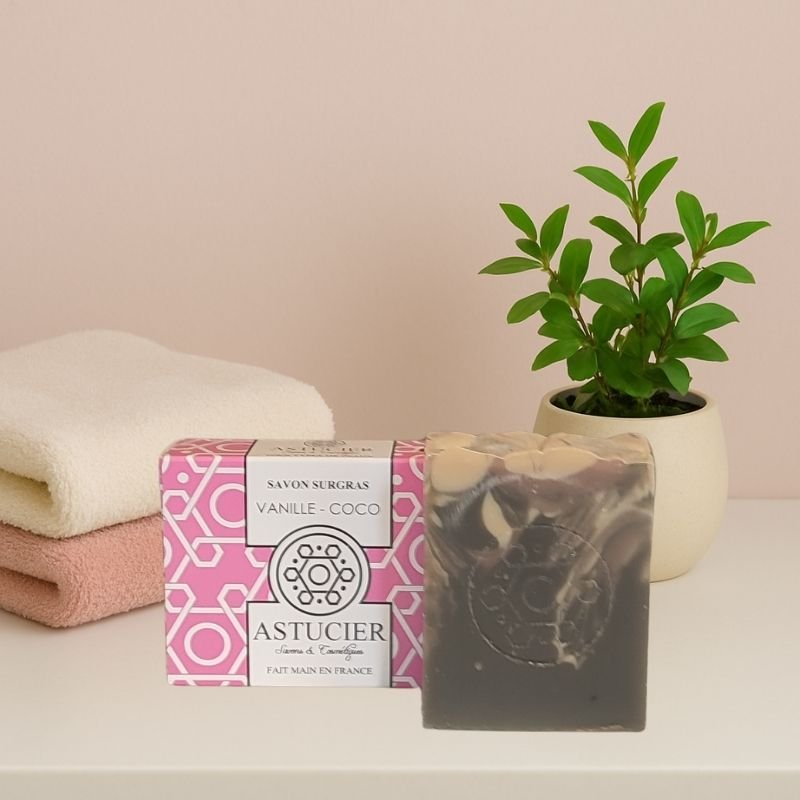
All my cold saponified soaps contain rapeseed oil from my farm.
This choice does not only correspond to a logic of formulation. It also reflects my way of working.
I want to make soaps that have a story. Soaps that connect the earth, culture, care and daily life. Soaps that prove that an farmer can go further than producing a raw material: it can turn it into a concrete solution for the skin.
When you choose an Astucer soap, you don't just buy a washing product. You choose:
- locally grown oil,
- craft manufacturing,
- a cold saponified formula,
- a simple approach to regain a more comfortable skin.
It is all this consistency that gives value to the product.


The colza oil in the kitchen: an asset also in the plate
The rapeseed oil does not stop at the bathroom. She also has all her place in the kitchen.
Its sweet taste makes it easy to use every day. It accompanies salads, dressings, some sweet cooking and pastry very well.
That's what I like about this oil: it takes care of you on several levels. In the plate as in the products you apply to your skin.
Idea recipe: simple vinaigrette with rapeseed oil and honey
Here is an easy recipe to make.
Ingredients:
- 3 tablespoons of rapeseed oil
- 1 tablespoon balsamic vinegar
- 1 teaspoon honey
- salt
- pepper
Preparation:
Mix all the ingredients in a bowl. Pour on a compound salad. You get a sweet, simple and tasty dressing.
Idea recipe: vegetables baked with rapeseed oil
Ingredients:
- 2 tablespoons of rapeseed oil
- 1 zucchini
- 1 red pepper
- 1 red onion
- 1 clove of garlic
- salt
- pepper
- thyme or parsley
Preparation:
Heat oil in a pan. Add the cut vegetables. Return until they become tender. Season and serve hot.
Simple, efficient, and faithful to everyday cuisine.
Why local really changes the value of the product
Today, many cosmetics highlight "stars" ingredients. We promise you an impressive list of assets from far away, extended routines.
I prefer another way.
I believe in the strength of a good ingredient, well chosen, well used, well drawn.
The rapeseed oil of my farm embodies exactly that. It brings to my knowledge a real dimension of proximity, sincerity and coherence. You know where she comes from. You know who cultivates it. You know who transforms her. You know who makes soap.
And in a world where people often consume without knowing, it changes everything.
My rapeseed oil soaps: a simple way to take care of your skin
If you're looking for a mild, local soap made from oils that I produce on my farm, you're in the right place.
All my cold saponified soaps contain this rapeseed oil from the farm. Some formulas also combine other oils produced in me, such as cameline oil, to meet different skin needs.
My soaps aren't trying to do too much. They're trying to be fair. Wash well. Respect the skin. Offer a pleasant shower. Help restore a more comfortable skin.
It's already a lot.
Conclusion: the benefits of rapeseed oil go far beyond the kitchen
Too often rapeseed is reduced to food use. Yet, the benefits of rapeseed oil are also known in cosmetics.
Thanks to its richness in essential fatty acids and vitamin E, it contributes to skin comfort, skin flexibility and smoothness. In a cold saponified soap, it becomes a precious ally for those who want to wash their skin without tearing.
And when this oil comes directly from the farm where the soap is made, the care takes on another dimension.
It becomes more local. More consistent. More sincere.
If you want to discover what this oil really changes in a soap, I invite you to browse my online shop and choose the one that best fits your skin. Because comfortable skin often starts with a simple gesture: better wash.