
 French manufacture 💧 Ethical & Authentic Care ✨ Natural care for all skins 💚 Wellness boxes made on the farm with love 🎁 Gift boxes 🌿 Natural routins
The cold saponified soaps have gained popularity in recent years, attracting more and more people in search of natural and skin-friendly beauty products. In this article, we will dive into the captivating universe of cold saponified soap, detailing its manufacturing process and the benefits it offers to your skin.
You'll find that exact definition here.
The process of making cold saponified soap.
Cold saponified soap is distinguished by the method This is particularly true of manufacturing, with lower temperatures than conventional saponification. This process keeps the beneficial properties of the oils used intact.
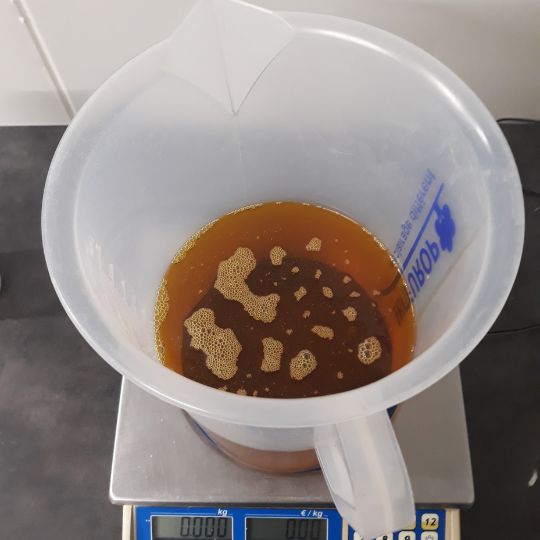
Choice of oils quality :
Choice of oils quality :It all starts with the selection of raw materials. Good soap never comes by chance. It is necessary to choose vegetable oils of quality, adapted to the needs of the skin and rich enough to bring real benefits. As a soap maker, I pay particular attention to this stage. Some of the oils I use come directly from my farm. This allows me to better understand their origin, their benefits and how they were produced. This direct link with the raw material gives even more meaning to manufacturing. Vegetable oils are not only used for « Do » Soap. They contribute to its softness, foam, ability to leave the skin soft and comfortable after use.
Cold Mix
The cold saponification based on a chemical reaction between vegetable oils and soda. Says like this, it may sound technical, but the principle is quite simple: fatty bodies turn into soap under the action of soda.
The difference with other methods is that this reaction is done without excessive cooking. Temperatures remain much lower. This technique allows to preserve as much as possible the virtues of the oils used.
This is precisely what makes the cold saponified soap So interesting. Where some soaps mainly seek to clean, it also seeks to respect the balance of the skin. Each ingredient makes the object of research, and its presence necessarily brings a plus.
Rest time: the cure for « Cold »
Once the soap is poured into its mould, it cannot be used immediately. It must dry and rest for several weeks. This step is called cure.
During this period, water gradually evaporates, soap hardens and becomes more pleasant to use. In my home, this cure lasts at least 6 weeks, but in most cases I rather wait 8 weeks before offering my soaps for sale.
This long time makes all the difference. It makes it possible to obtain a milder, more stable and more durable soap. In a world where everything goes fast, the cold saponified soap recalls that a good product takes time.
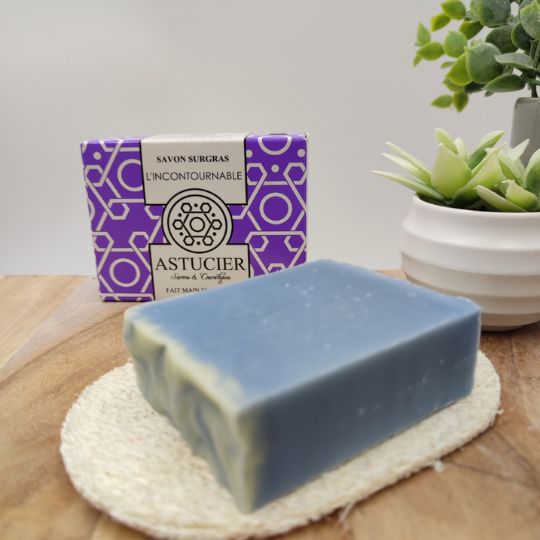
The benefits of cold saponification
If cold saponified soap pleases so muchIt's because he doesn't just wash. It also brings comfort. And when you have the skin that pulls, that bleeds easily or becomes uncomfortable after the shower, this difference feels very fast.
A naturally occurring glycerin
One of the great assets of cold saponified soap is that it naturally retains its glycerine. it is produced during the saponification reaction. In industrial manufacturing it is often removed for use in other cosmetic products. Here, she stays in soap.
This natural glycerin contributes to the comfort of the skin. It helps to limit dryness after washing and provides a softer touch.
it is the softest for the skin
The cold saponified soap effectively cleans without giving this skin-cut sensation that many know with some shower gels. It respects the hydrolipidic film, this natural barrier that protects your skin every day. It also makes it possible to keep all the qualities products which are added to the formula, such as milk, Shea butter, whatever the quantity.
This is why it is particularly suitable for sensitive, dry or reactive skin. Of course, each skin is different, but many people quickly notice a real difference in their comfort after the shower. Daily use of hand-made overgras soap is a real pleasure, an addictive moment.
Oils with preserved properties
The vegetable oils used naturally bring essential fatty acids, vitamins and antioxidants. As the technique remains soft, some of these properties are better preserved.
As a result, soap is not just washed. It becomes a true cleansing care, pleasant to use daily.
The supergras: a real plus for a soap factory
The cold soap are usually overgras. This means that some of the oils are not transformed into soap and remain available to provide more comfort to the skin.
The overgras helps make the soap more nourishing and softer. It's a real advantage if you're trying to avoid pulling after the shower. For many, this is even what completely changes the washing experience. Gentleness is the master word of these solids.
To obtain the overgras, we add the vegetable butters or goat milk to the trace. which helps to limit the heat of these raw materials.
A different experience in the shower
We often talk about composition, oils, glycerine or surgras, but there is also something very concrete: sensation.
Use a cold soap, it is not only choosing a more natural product. It's also a nicer shower. Foam is often more creamy than you can imagine. The gesture becomes simple, sensory and reassuring. The skin looks clean, but not attacked. It remains more flexible, more comfortable.
When you get used to ituse Very fragrant or very foaming products, you rediscover with cold soap another way to take care of yourself: simpler, more authentic, but often much more satisfying.
Other methods to get soap
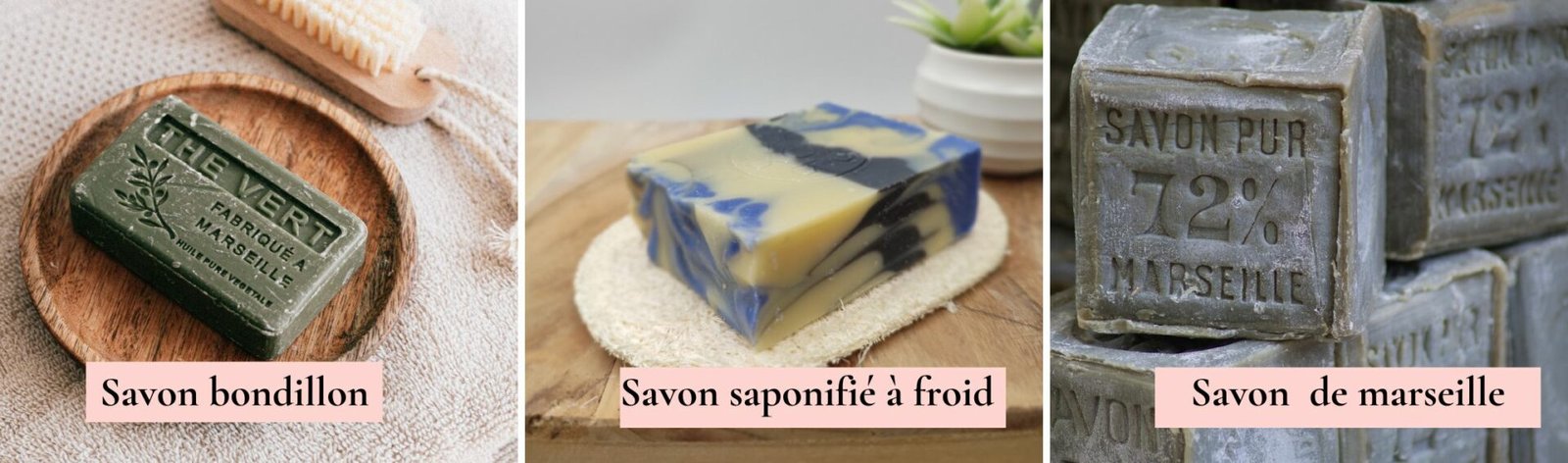
To better understand what distinguishes cold soap, it is useful to compare this method with other processes.
The traditional cauldron
The cauldron method is very old and widely known. It consists of cooking oils with high temperature soda. This cooking accelerates the chemical reaction and quickly obtains a solid soap.
This technique gives effective soaps to clean, but it does not work in the same way as cold saponification. The final result is often more focused on washing function than on skin comfort.
Soaps based on bobbins
Another is the use of bondages.say chips or pieces of soap already made. These buds are melted, then possibly add perfumes, dyes or other ingredients before moulding the soap.
It can quickly create visually beautiful soaps, but it does not offer the same mastery of the recipe as a complete artisanal manufacture. When you make soap from A to Z, you choose each oil, each proportion and step accurately.
Why Soap Likes So Much Today
The return of soap is not only a trend. It meets a real expectation. Many consumers now want to understand what they put on their skin. They want more readable compositions, simpler products and more transparent manufacturing.
This soap often ticks all these boxes. He reassures by his simplicity. He seduces by his authenticity. Above all, it provides a concrete response to a very common need: clean your skin without mistreatment.
Choosing homemade soap is also a step towards a more conscious consumption. A product that takes time, know-how and real attention to quality.
Conclusion
It stands out for their exceptional benefits to the skin. The careful preservation of oils and glycerin creates a final product that goes beyond simple cleaning. Choosing such a thing is choosing lasting benefits for your skin.