 French manufacture 💧 Ethical & Authentic Care ✨ Natural care for all skins 💚 Wellness boxes made on the farm with love 🎁 Gift boxes 🌿 Natural routins
Atopic skin soap? Really.
Do you have the skin that pulls, blushes, itches ? If you suffer from eczema or atopic dermatitis, you know how crucial the choice of hygiene products is. Using bad soap can turn a shower into a real ordeal and worsen your symptoms. But then what is the soap atopic skin par excellence? I invite you to dive with me into the secrets of soothing skin.
Why is your atopic skin so specific?
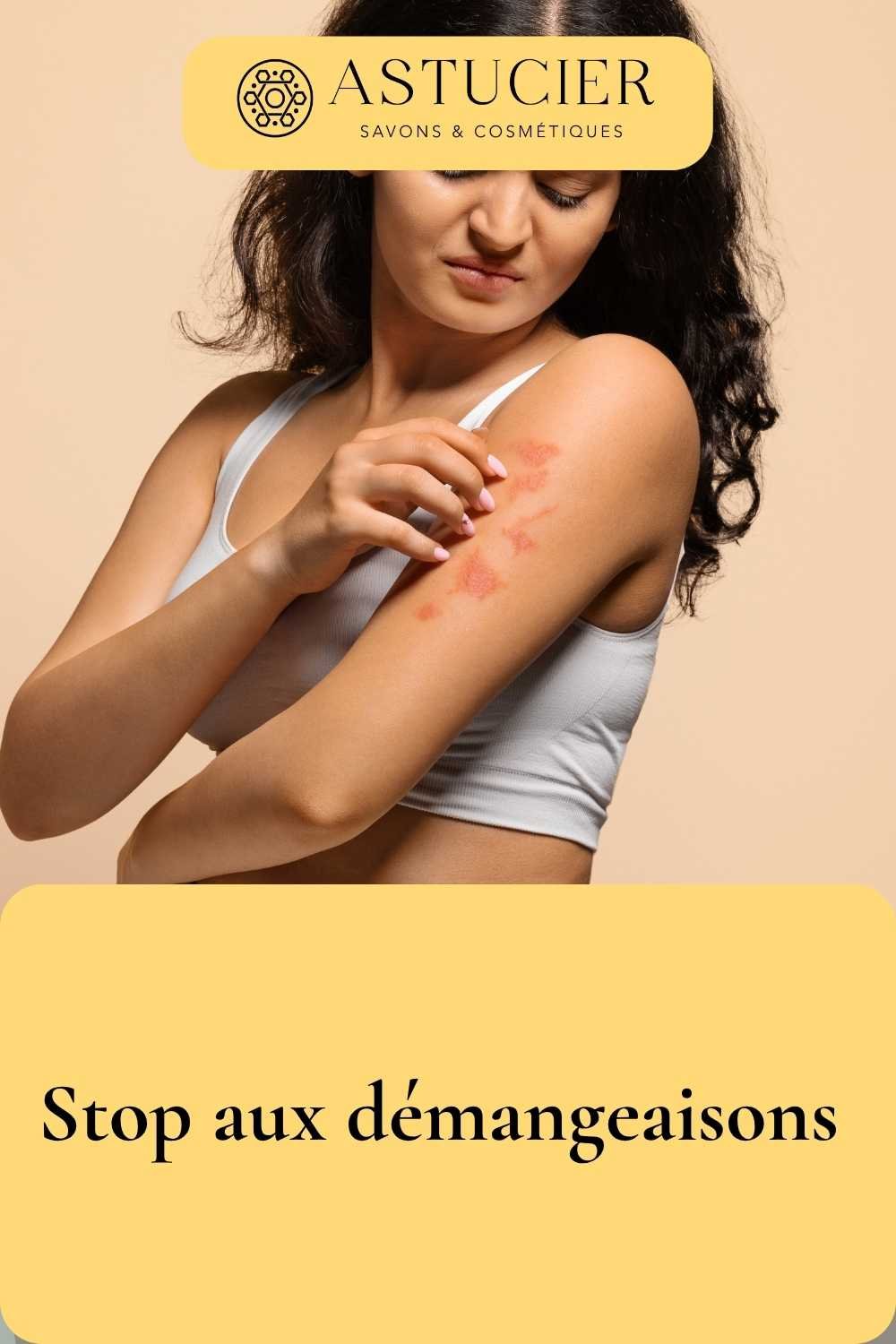
Your atopic skin is a very dry skin whose skin barrier is altered. This fragility makes it more permeable to allergens and irritants, causing inflammatory reactions such as red plates, intense itching and desquamation. It's a vicious circle: skin scratches, scratches, the barrier gets further damaged, and itching becomes more intense.
This is why a atopic skin soap must not be a soap « Normal ». Classic soaps, often too alkaline and rich in stripping agents, aggravate drought and irritation. The solution? The artisanal soaps that I design with all my expertise.
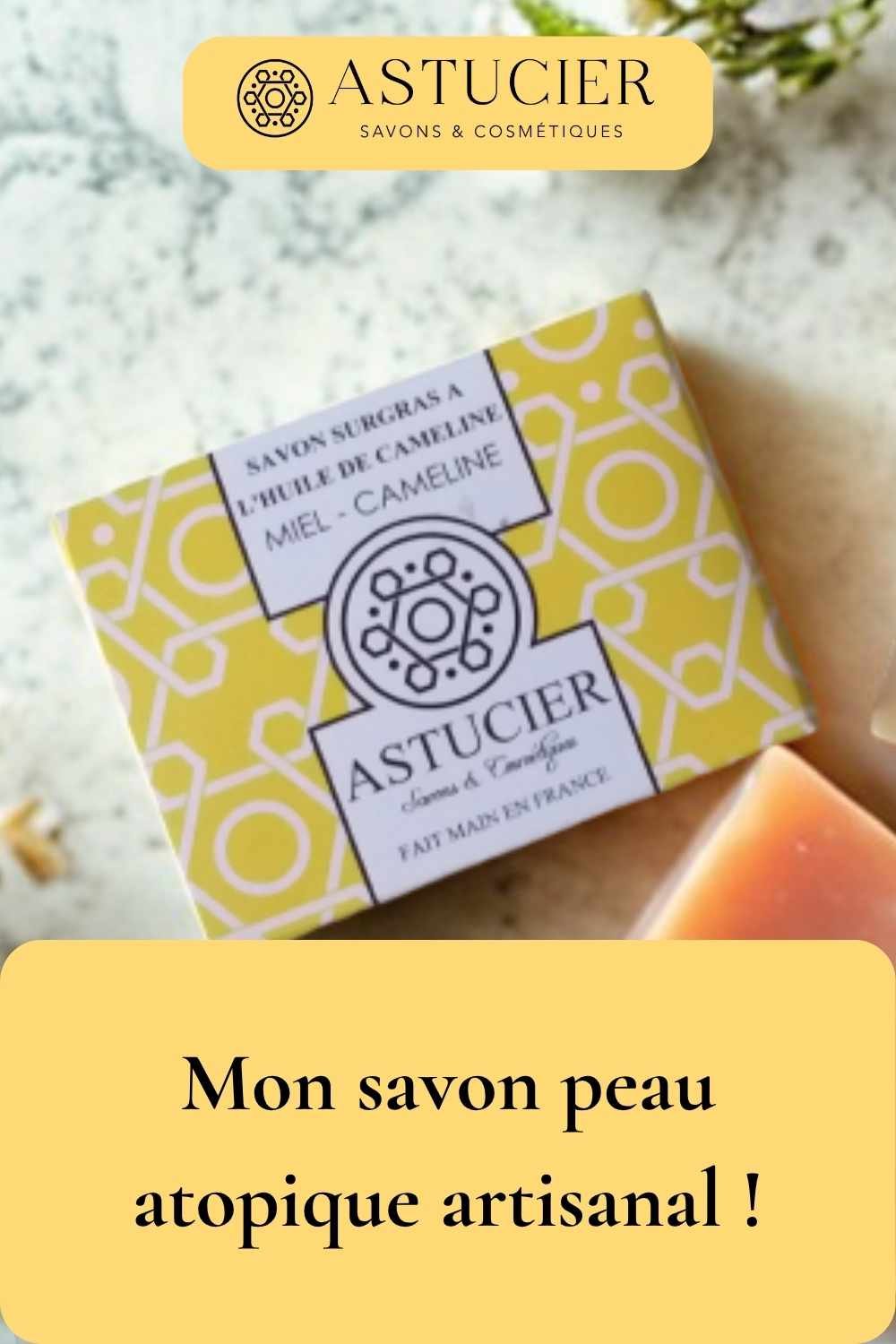
The magic of cold saponification: my secret atopic skin soap
As cold soap producerI know the importance of a respectful process to obtain a product of unparalleled quality. Cold saponification is my ancestral method of choice, it allows me to transform vegetable oils and soda laundry into soap and natural glycerine. Unlike industrial soaps, my cold soap retains all its richness:
- A high natural glycerine content: Produced naturally during the process, glycerin is a powerful humidant that attracts water and intensely hydrates your skin, essential for atopic skin.
- Surgras soaps: J These oils « free » nourish and protect your skin after washing, forming a protective film that strengthens the skin barrier. This is what makes all the difference for a atopic skin.
What your atopic skin really expects from a soap
When your skin is atopic, it does not "react" to complicate your life. She's mostly pointing you out: your skin barrier is weakened. As a result, you lose water more easily, you feel itching, itching, sometimes plates. And often the shower triggers everything.
So no, you don't need a "magic" product.
You need a soap that lava without stripping.
This is exactly where the soap atopic skin makes the difference... provided that it is really soft, well formulated, and manufactured with a respectful method.
Vegetable oils except for soothing skin
The choice of ingredients is essential. That's why I carefully select each oil for its specific properties. And the best? Some even come directly from my own farm!
- Karite oil: Unquestionable for its restorative, nourishing and protective virtues. Rich in vitamins A, D, E, it soothes irritation and promotes healing.
- Coconut oil: Used sparingly for its natural foaming capacity, it also provides a purifying and protective action.
- Wheat Germ Oil: A treasure of vitamin E and antioxidants. It helps to regenerate your skin. Improves its elasticity and fights against skin aging, particularly beneficial for fragile skin.
- Jojoba oil: Non-comedogenic, it regulates the production of sebum while providing deep hydration. Close to the natural sebum of your skin.
- Colza oil, Cameline and Hemp (from my farm!): These oils, cultivated with passion on my land, are true nuggets for sensitive skin.
- LColza oil, rich in omega-3 and 6, nourishes and contributes to the lipid balance of your skin.
- LCamelin oil, with its exceptional omega-3 profile, is known for its soothing and anti-inflammatory properties, ideal for calming redness and itching.
- LChanvre oil, also rich in omega-3 and 6, is a powerful ally for atopic skin thanks to its anti-inflammatory and regenerative virtues, helping to restore the skin barrier.
These oils work in synergy to offer your atopic skin a gentle cleansing. And deep nutrition, without attacking or drying.
Why industrial soap can worsen discomfort
I'm just saying: many industrial soaps are trying to be "perfect" for the factory. Not for your skin.
They bet on:
more aggressive washing bases,
hot processes that "standardize" the formula,
sometimes a glycerin removed for resale elsewhere,
And a feeling of "clean" that looks more like... A squealing skin.
On an atopic skin, this "crying" means one thing: You've taken too much.
Too much fat. Too much natural protection.
My goal with atopic skin soap: softness + efficiency, without compromise
When I make, I think of the post-shower. Not just when it foams.
I want you to think:
"Okay, it washes."
"But above all... My skin doesn't shoot."
"I don't need to catch up with three layers of products."
A well overgras cold soap, rich in natural glycerin, it's kind of like a washing that respects your rhythmInstead of knocking you out.
Beyond atopic skin soap: the importance of complete routine
One good soap atopic skin It already changes a lot. It makes the shower softer. It avoids the "skin off" effect. But if I'm honest with you, the atopic skin is not played on a single product. She plays mostly on a sum of details. Simple details, but repeated every day.
Shower, for example. When the water is too hot, your skin defends itself. At the moment, it may seem nice to you, but then you pay for the addition: tiring, itching, feeling uncomfortable. By keeping a warm water and a short shower, you're already making a huge gift to your skin barrier. You stop asking her to "hold" when she's weakened.
Then there is the moment that many underestimate: the shower outlet. Friction of the towel can become an aggression, especially on reactive skin. I prefer a gentle gesture, almost as if you were drying a "to clean" skin. You buffer, you leave a slight humidity, and you immediately move on to the step that changes everything: care.
This is where the rule of a few minutes is precious. After the shower, the water evaporates quickly. And on atopic skin, this evaporation can accentuate the feeling of dryness. When you apply an emollient, a care oil or a balm quickly, on a skin still a little damp, you do not "just moisturize". You help your skin hold what it has. You strengthen his comfort, instead of running after him.
And yes, in this logic, my balms and oils naturally find their place. I think of them in the continuity of soap: simple formulas, carefully chosen vegetable oils, and this idea of gentle synergy. Not to add steps. Rather to allow you to stay on a minimalist routine: a good wash, a good care, and basta.
What I want is for your shower to be a "cocoon" moment. A moment when you feel that your skin calms instead of tendering. And I'd rather tell you as well: if you're going through a big push, with very inflamed plates, cracks, sprains, or a major discomfort, medical advice is the best option. I will guide you on the choice of soap atopic skin And the gestures that sooth. I'm not replacing a diagnosis.
But in everyday life, these adjustments make a real difference. A well washed skin, without being attacked, then fed immediately after... It is often a skin that relaxes. Skin that scratches less. Skin that becomes more comfortable, day after day.

Conclusion atopic skin soap? Really!
Your atopic skin doesn't require a complicated routine. Most of all, she asks you for consistency: a cleansing that respects, gentle gestures, and a care applied at the right time. When you change that, the shower stops being a test. She's back to being a parenthesis. A comfortable skin is often a skin that has stopped "over-solicitation".
That's exactly why I make my soaps cold: I grow my oils, I transform them, and I think of every formula to help restore this simple comfort, without stripping or overloading. And if you want to go further, keep that minimalist logic: a good one. soap atopic skin, then a nourishing treatment just after the shower. Nothing more. Just what works.
If you want, tell me in comment what bothers you most today (scratch, itching, plates, very dry areas). I answer you with a simple track to test, and a gesture to adopt from your next shower.