
 French manufacture 💧 Ethical & Authentic Care ✨ Natural care for all skins 💚 Wellness boxes made on the farm with love 🎁 Gift boxes 🌿 Natural routins
There are many soaps at low prices everywhere, it is industrial soap made in very large quantities and not artisanal soap.
Industrial soaps also nest in your parapharmacies, your favorite cosmetics stores.
They are the subject of a flawless marketing to get you cracked, and it works, as you turn your eyes closed towards these soaps with sometimes questionable qualities.
Major players in the soap industry.
I don't quote them, but you know them, he's drinking you advertising permanently. These are often huge international groups. Actually, there's not that many: 2 or 3, but you know their brand, not the parent house.
Generally the same manufacturer offers on the market soaps from the same factory under different brands and at different prices.
These industrial players are also present in the field of shower gels, most often produced with synthetic compounds. To mention only a few, henkel, johnson and johnson, unilever...
The process of manufacturing industrial soap
Industrial soap is made hot, over several days, the temperature can reach a hundred degrees. This industrial method is said to be too much soda, as a much larger amount of soda is added for the amount of oil present. Each gram of oil is therefore converted into soap, but soda remains in the soap paste.
The dough obtained is rinsed with salt water.
Salt water helps to remove excess soda which is still present in soap paste. This water carries with it the glycerin produced naturally during the saponification reaction.
There's just the soap left that, alone, dries and pulls the skin. This soap, whether of good quality or not, lacks its glycerine, so they have lost all the hydrating characteristics of the latter.
This soap is then grated in the form of chips called budillons, which will be passed into an extruder with additions like perfume, dyes... to give beautiful soaps all regular.
Raw materials and soap industry.
According to its manufacturing technique, industrial soaps need stable oils to be manufactured.
These are most often palm oil (but not the first pressure, not the following), animal fats such as beef tallow at low cost.
You can find them under the name sodium tallowate for beef tallow and sodium palmate for palm oil.
The industry very rarely uses olive oil. In most, the one using olive oil, want to boast of being a « real Marseille soap ».
Fragrances of industrial soaps
These are almost systematically synthetic, because much cheaper and more stable over time.
It also allows a very wide variety of fragrances, from the most classic like vanilla to the most stuffed like papa beard or piña colada.
Essential oils are very volatile, fragile, they do not like high temperatures, and they do not guarantee a stable fragrance over time.
Industrial soaps: their color.
It is obtained by adding additives that are not natural. Even if you want to get a white soap, add a dye.
To obtain transparent or white soaps, chemicals are added to the dough.
The price of soap manufactured by industry.
The price can be mini, when I see perfumed soaps packed from 100g to 99cts, it seems unlikely.
There are transport costs, manufacturing, packaging...
With 99 cts, it doesn't even cover the cost of my raw materials for a 100g soap.
Anyway, for my part, it seems unrealistic.
But beyond the sale price, industrial soaps often have a huge environmental and human cost.
Production of palm oil, production in energy plants most often distant. The working conditions in these plants may also raise questions.
Semi-industrial or semi-crafted soap.
Many soapmakers claim to be artisans, but manufacture semi-industrially with the help of chips that pass into extruder. Cheap, they are easily accessible and allow fast manufacturing with little manipulation.
They are simply cluttered and extruded to come out in a boudin, it is possible to add oils, perfumes, pigments...
Only this step, adding oil, glycerine, essential oil in an industrial bond, is artisanal.
Even if the additions are of quality, the soaps will never be as rich as our saponified cold soaps where all the materials remain in the soap, without undergoing further transformations.
Make the difference between industrial soap and artisanal soap.
Here are some tips to identify real artisanal soaps:
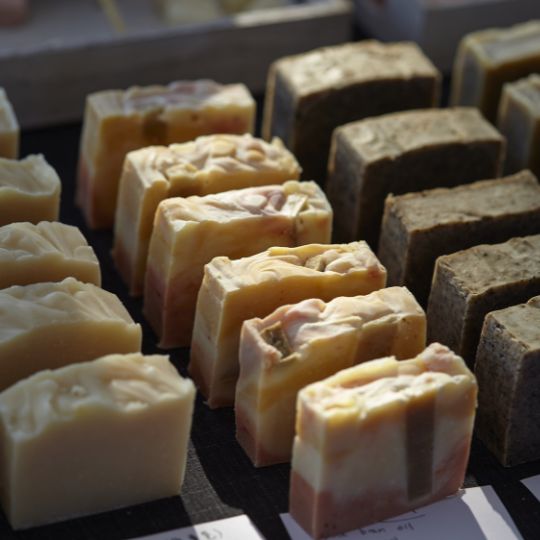
The regularity of soaps! If all the soaps are the same, this is not a good sign, an artisanal soap is made by hand from end to end, so it rarely has the same appearance.
In soap factory, the irregularity is the sign of quality!
Hardness! An artisanal soap will always be softer than a soap on a logillon.
Soap composition! You will find little palm oil in real artisanal soaps.
So if you read sodium palmate in the compositions, go your way.
Recognise an industrial or semi-crafted soap from an artisanal soap
Industrial soaps
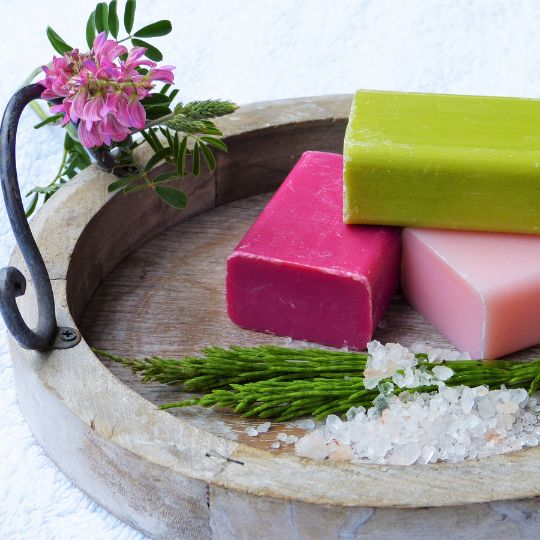
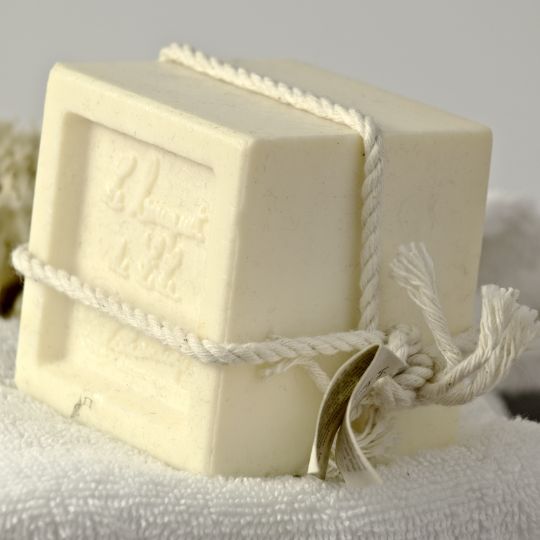
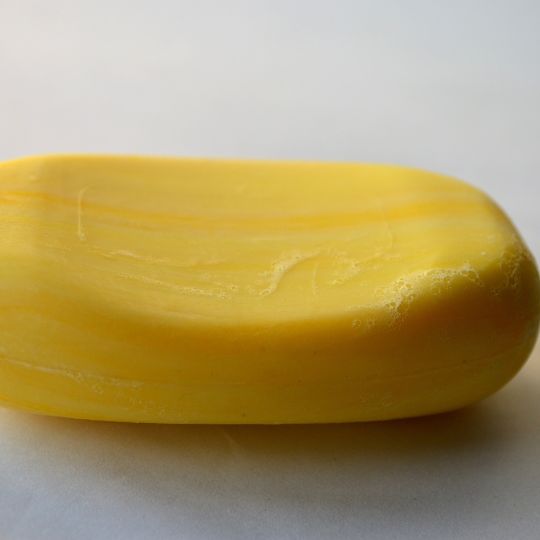
Craft soaps
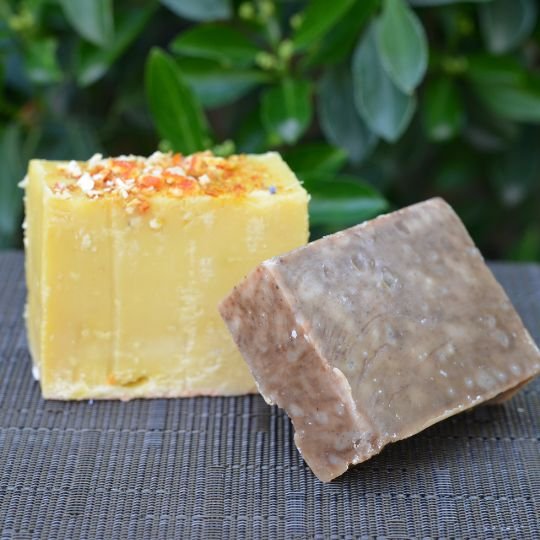
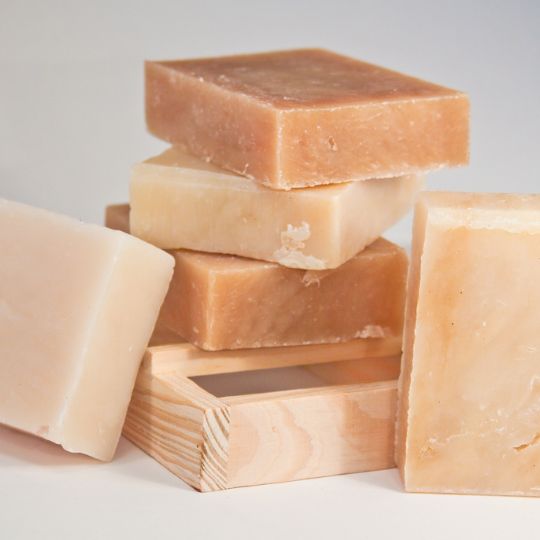
3 reasons to avoid industrial soaps.
Their compositions, Very often made with oils of poor quality, synthetic fragrances...
The method of manufacture, Very energetic. In addition to consuming a lot of energy for the manufacture of bluffs, industrial soaps usually travel around the world several times. In the form of raw material and then in the form of finished products.
Their impact on your skin. Their composition contains irritating bases, and many chemicals to help lower the prices of these soaps.
My cold handcrafted soaps in the picture.
I'm making my know-how by hand. I produce a maximum of 30 kg of soap at one time.
This allows me to control from end to end the manufacturing process, my raw material temperature, their addition at the most opportune time to maintain their quality.
I'm using only raw materials, carefully chosen for their virtues, their benefit for your skin, and not because they are cheap.

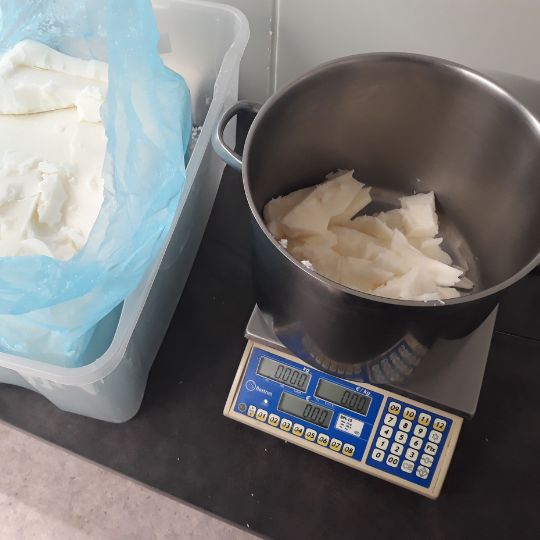
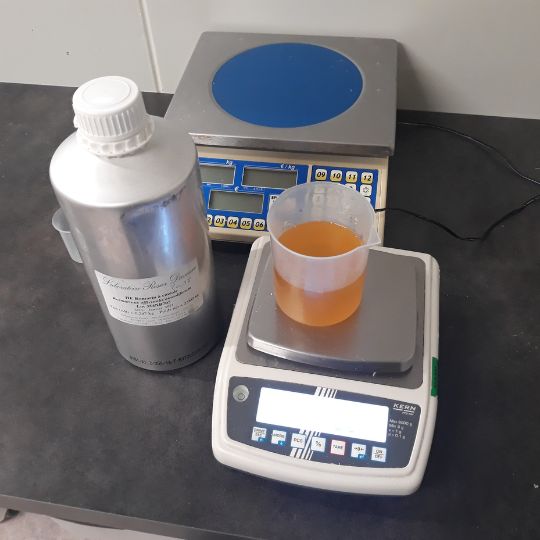
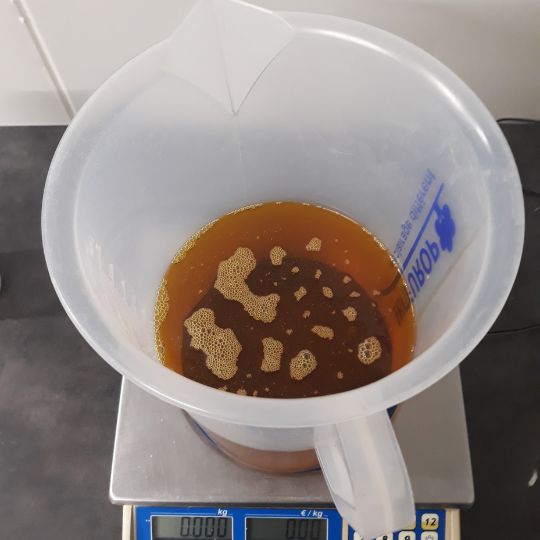

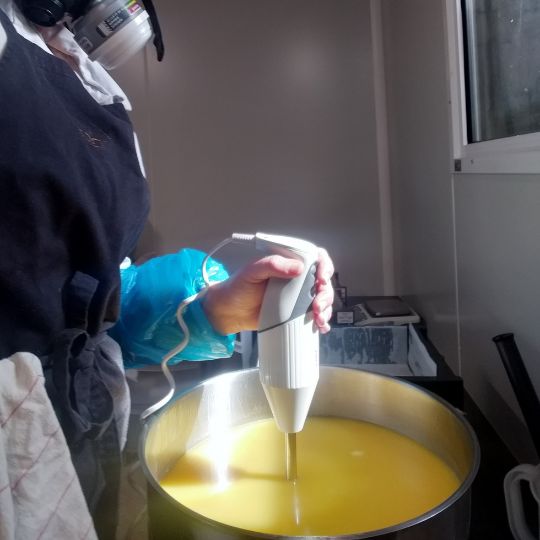

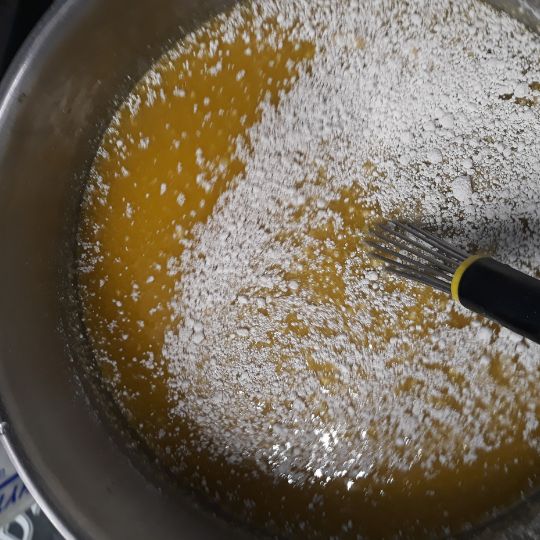
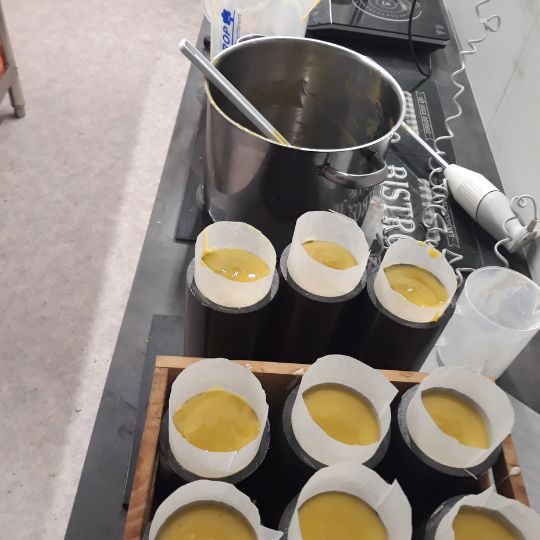
Here is a picture of the course of the saponification reaction. You can see the video manufacturing process if you want.
I hope this article allowed you to understand the difference between industrial or semi-crafted soap and artisanal soap.
The soaps are all handmade, with passion and care.
Any more doubts? Send me an e-mail, I'll be happy to answer your questions to remove your last reservations: contact@astucier.fr
Why choose artisanal soap?
- it is made locally,
- it uses quality raw materials,
- It is soft and moisturizing,
- it is biodegradable,
- it allows you to please yourself,
- It takes care of your skin.
- It is made with passion,
- it is made by hand
- Each soap will be different, it's a little unique.